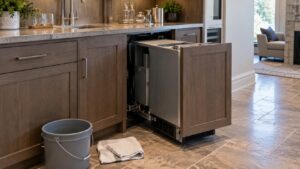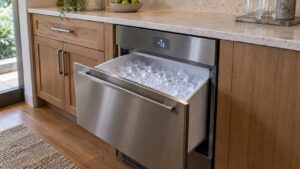
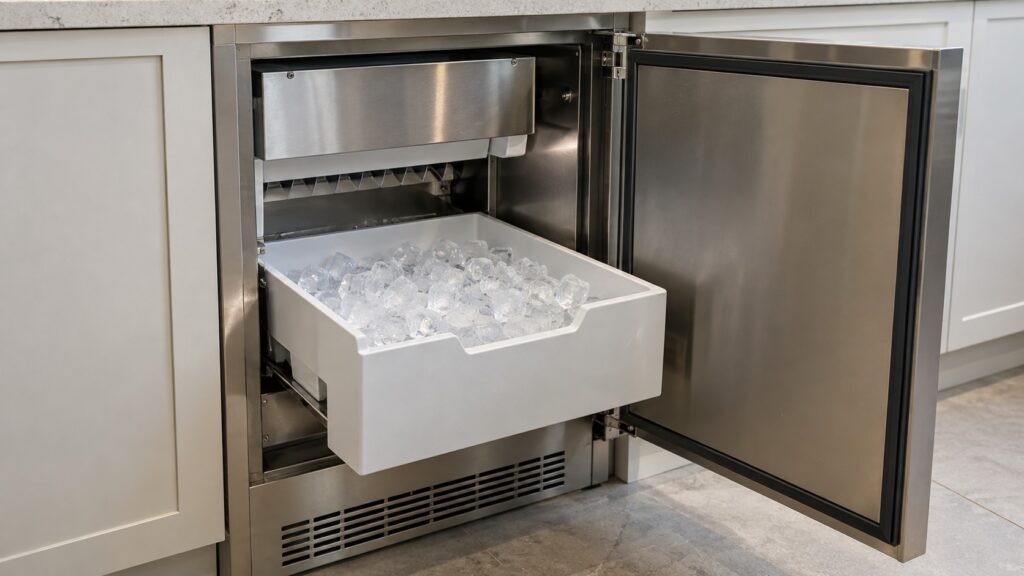
A Jenn-Air JUIFN15HX under-counter ice maker needs cleaning far more often than most kitchen appliances get it, because it is one of the few units in the kitchen that makes water sit in a reservoir at room temperature between cycles. Left alone, that reservoir grows the same mineral scale and biofilm that build up in any standing-water appliance, and both end up in the ice itself.
Why does the JennAir JUIFN15HX need cleaning more often than a refrigerator ice maker?
A refrigerator’s ice maker sits inside a compartment that is already cold, and the water it uses passes through relatively quickly on its way to the ice tray. A JUIFN15HX under-counter unit works differently: it is installed outside the refrigerator’s cold zone, usually in a cabinet at room temperature, and it holds a standing water reservoir between production cycles rather than passing water straight through. That standing reservoir is exactly the condition that lets mineral scale build up on internal surfaces and lets biofilm start forming in the reservoir and lines, in a way a refrigerator’s quicker water path mostly avoids. Both problems show up first as a change in the ice itself — a faint off taste, a cloudy or opaque cube instead of a clear one, or ice that melts unevenly — well before either problem is severe enough to stop production outright.
How should the ice bin be cleaned week to week?
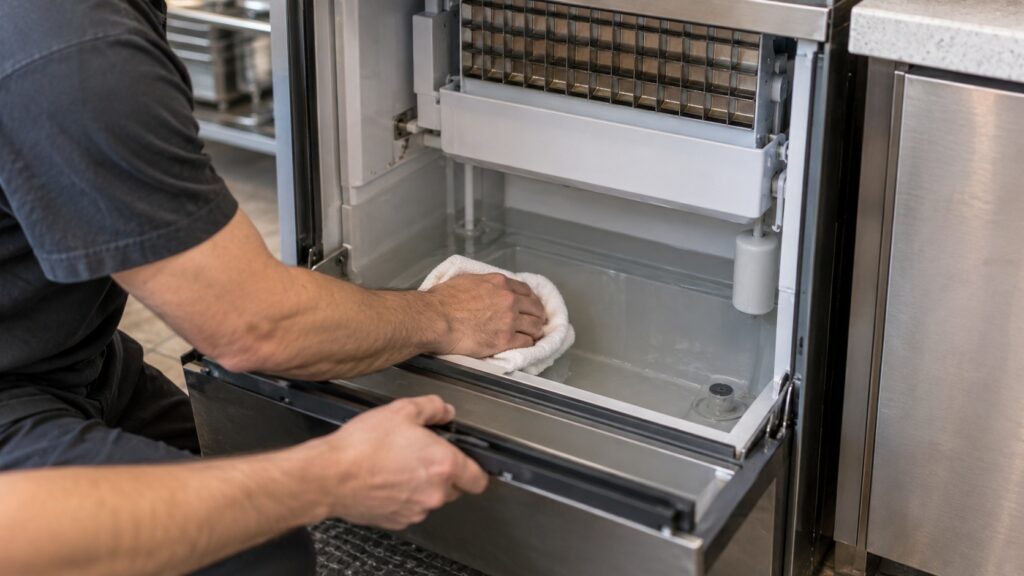
The ice storage bin should come out for a wipe-down on a weekly basis, more often in a household that runs the unit constantly. Empty any ice that has partially melted and refrozen into a solid mass, since that mass blocks fresh ice from dropping cleanly and eventually jams the auger or the door. Wipe the bin’s interior with a clean cloth and warm water, and let it air-dry fully before closing the door again — sealing a damp bin inside a cold compartment is one of the more common ways mold gets a start in an otherwise well-maintained unit.
How often should the water reservoir on a JUIFN15HX get a full clean?
The internal water reservoir and supply lines need a deeper clean roughly every one to two months under normal use, and sooner than that if the household notices any change in ice clarity or taste. This is a different job from wiping the bin: it means running the unit’s cleaning cycle if it has one, or manually flushing the reservoir with a food-safe cleaning solution designed for ice machines, then rinsing thoroughly and running a few discard cycles of ice before using any of it. Skipping the rinse step and going straight back to normal ice production is a common shortcut that leaves cleaning-solution residue in the first batch of ice.
When does a JUIFN15HX need descaling instead of just cleaning?
Descaling targets mineral buildup specifically — the white or gray scale that forms on heating elements, water lines, and the ice-forming surface in areas with hard water — and it is a different chemistry from the biofilm-focused cleaning solution used on the reservoir. A household on hard water should plan on descaling every three to four months; on softer municipal water, every five to six months is often enough. The clearest sign that descaling is overdue is ice that comes out smaller or more irregularly shaped than usual, since scale buildup on the ice-forming surface changes how evenly ice releases from it.
What does a partially blocked drain do to a JUIFN15HX over time?
Most under-counter ice makers, including this model, rely on a gravity drain rather than a pump, which means the drain line has very little pressure behind it to clear a partial blockage on its own. Lint, scale flakes, or a kink in the drain hose slows drainage gradually rather than stopping it outright, so the early sign is often standing water in the base of the unit rather than a dramatic overflow. Checking the drain line at the same time as each scheduled cleaning catches a partial blockage before it becomes a full one. Running a cup of warm water down the drain line at each cleaning, before the unit is reassembled, is a simple way to confirm it is still flowing freely rather than waiting to find out the hard way after ice production has already slowed.
What maintenance does not need to wait for a scheduled cleaning?
A water filter change, if the model has one plumbed inline, follows its own schedule independent of the cleaning calendar above and is usually printed on the filter housing itself. Beyond that, any ice that develops a persistent off smell, any water pooling around the unit’s base between scheduled cleanings, or ice production that slows noticeably between one week and the next are all signs worth acting on immediately rather than waiting for the next routine clean. Keeping a simple written log of the last cleaning, descale and filter-change dates on the inside of a nearby cabinet door makes it far easier to tell whether a given symptom is overdue maintenance or an actual fault.
When does an ice maker problem need a technician instead of routine cleaning?
Routine cleaning and descaling resolve most of the taste, clarity, and slow-drain issues that show up on a well-used under-counter ice maker. Ice maker not making ice covers the troubleshooting path for a unit that has stopped producing altogether, and ice maker error codes explained is the right next step if the display is showing a fault rather than simply making less ice than usual.
We are an independent repair company, not a factory service arm, and we will tell you when a repair is not worth doing. Pricing starts from a diagnostic visit and we confirm the estimate before any work begins. Jenn-Air ice maker repair covers the JUIFN15HX and its sister models, and you can schedule a visit if cleaning and descaling do not bring ice quality back on their own.