Jenn-Air MultiMode convection is the system behind the brand’s wall ovens, and it is worth understanding for one practical reason: when baking goes wrong on one of these ovens, the fault is usually in the way air is being moved rather than in how hot the cavity is. This guide explains what the system does, what each part contributes, and how to read the symptoms when results drift.
Why moving the air changes the cooking
In a still oven, hot air rises and sits at the top, cool air sinks, and the cavity develops layers. That is why a single-rack bake works fine and a three-tray bake does not: the trays experience different temperatures depending on their height, and the food nearest an element browns first.
Circulating the air flattens those layers. Every rack sees close to the same conditions, browning becomes more even, and the oven can run slightly cooler for the same result because heat is delivered rather than waited for. That is the whole of the theory, and everything else is engineering detail about how to move the air without blowing the food around.
Modes are recipes, not speeds
A convection mode is a combination: which elements are energized, how the fan runs, and what the control does with the temperature reading. A convection bake mode uses gentle circulation with the baking elements. A convection roast mode leans on the upper element and the fan together to brown a joint. A proofing mode uses very low heat with the fan barely moving air at all.
This is why “the convection is not working” needs a follow-up question: in which mode? A fault that appears only in roast mode points at the element that mode relies on, while a fault in every mode points at the fan or the control. That single detail can be the difference between one visit and two.
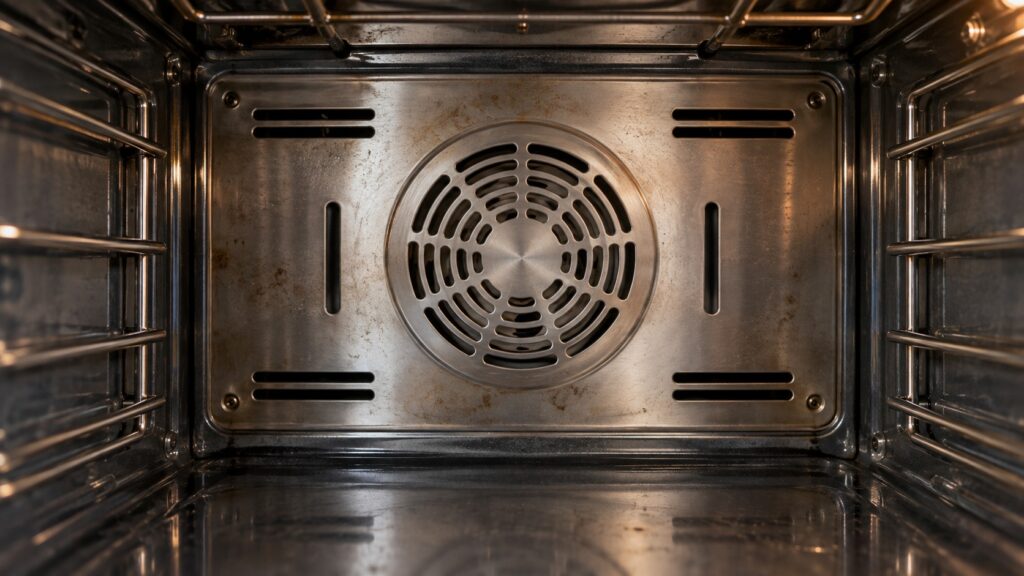
Reading uneven baking correctly
Uneven across a single tray. Look at airflow first — an overloaded cavity, a tray that blocks the vents, or foil laid on a rack all break the circulation the system depends on.
Uneven between racks. That is the case convection is supposed to solve, so a genuine difference between racks suggests the fan is not moving air as it should.
Everything browns on one side. Look at the door seal and at whether the oven sits level in its cabinet. A leak at one edge of the gasket makes a consistent cool spot.
Everything is simply wrong by a margin. That is calibration or the sensor rather than convection. Our guide on uneven heating covers how to tell the two apart.
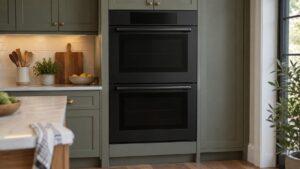
One cavity of a double oven only. Worth reporting in exactly those words. Each cavity has its own elements, its own fan and its own sensing, so a fault confined to one of them clears the shared supply and most of the control from suspicion immediately.
There is also a pattern that is not a fault at all: a convection bake that browns beautifully on the sides and less so at the very back of a tray pushed hard against the rear wall. Air cannot circulate where there is no gap, and the fix is an inch of space rather than a service call.
The fan is the part that fails
The distinction in the third row causes a surprising number of unnecessary calls. A cooling fan that keeps running for a while after the oven is switched off is protecting the electronics; it is meant to do that, and the noise is not a fault.
Getting the best out of it
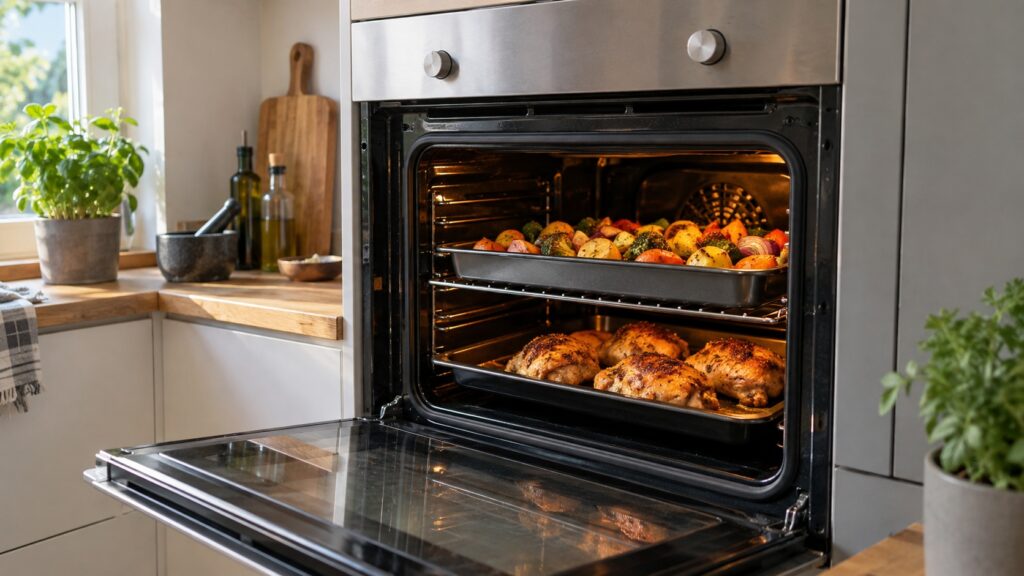
Use the pans the system expects: low-sided, light-colored sheets let air reach the food, while deep, dark roasting pans shield what is inside them and defeat the point of the fan. Leave a gap around every tray so the circulation has somewhere to go, and resist filling the cavity edge to edge.
Reduce the temperature slightly when converting a conventional recipe, and start checking earlier than the recipe says. Convection cooks faster at the same dial setting, and the first few bakes are where you learn your own oven rather than the one the recipe was written for. Routine care — clean interior, working seal, clear vents — keeps all of it honest, and is covered in oven maintenance.
Finally, give the oven a chance to tell you the truth. Check results with the cavity empty except for what you are testing, on the middle rack, with a thermometer you trust left inside for a full preheat and ten minutes beyond it. Half the convection complaints that reach us are measured on a crowded oven during a holiday, which is the one condition no oven handles well.
If the oven is new to you, run one deliberate test bake before you trust it with a holiday meal: a tray of plain cookies on the middle rack, turned once, watched to the minute. It tells you how fast this cavity browns, whether the back runs hotter than the front, and how much to adjust a familiar recipe. Ten minutes of cookies is a better introduction to a convection oven than any manual, and it gives you a baseline to compare against if results drift later.
When to call
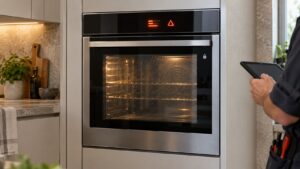
Call when the convection fan is noisy or silent, when one mode misbehaves while others are fine, when baking is uneven with a clean cavity and a good seal, or when a code appears and returns after a power reset. A fan motor replaced early is a modest job; a seized fan that has been ignored usually brings company.
We are an independent repair company and not a factory service arm. Pricing starts from a diagnostic visit, and we confirm the estimate before any work begins. Jenn-Air oven repair covers convection fans, elements, sensors, latches and controls on single, double and combination wall ovens, and you can schedule a visit online.