Getting the most from a Jenn-Air induction cooktop takes a different set of habits than a gas or radiant electric range, because induction heats the pan directly through a magnetic field instead of heating a burner or coil first. Most of the everyday problems people blame on the cooktop — pans that “don’t work,” a burner that clicks off on its own, a scratched-looking surface — trace back to a handful of habits that are easy to fix once the difference is clear.
Why does a pan sometimes not heat at all on the cooktop?
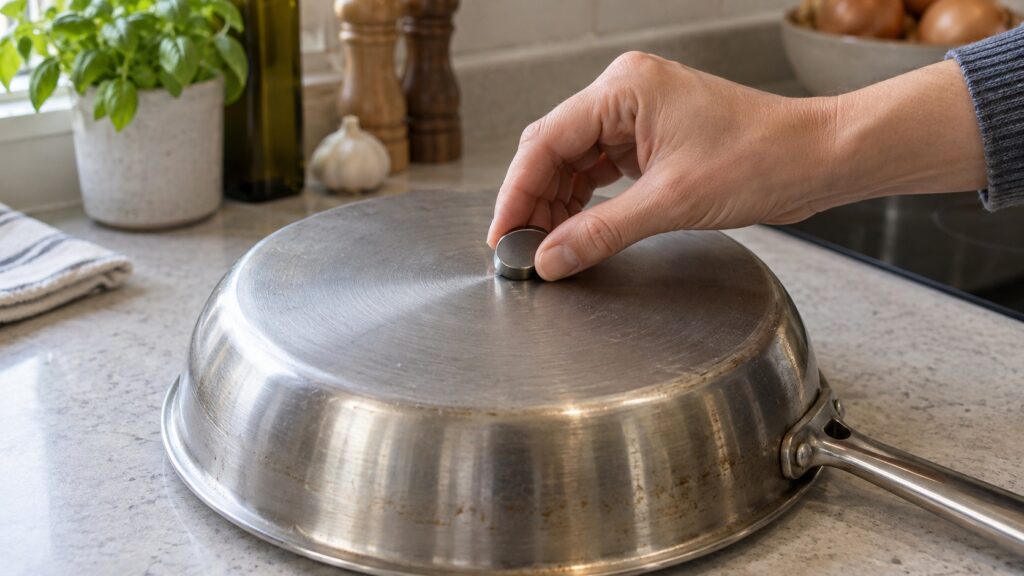
Induction only heats cookware that responds to a magnetic field, so the single most common reason a pan “doesn’t work” is that it simply is not induction-compatible. A quick check settles it without guessing: hold a refrigerator magnet against the bottom of the pan. If it grips firmly, the pan will heat; if it does not stick, or sticks only weakly, that piece of cookware will not work on this cooktop no matter which zone or setting it is placed on. Stainless cookware with an aluminum or copper core sometimes passes the magnet test on the outer layer but heats unevenly — that is a cookware-quality issue, not a cooktop fault.
Why does a burner shut off partway through cooking?
Getting the most from a Jenn-Air induction cooktop means understanding that each zone actively senses whether a compatible pan is still correctly positioned on it, and it shuts that zone down automatically if the pan is lifted, shifted off-center, or swapped for one that is too small for the marked zone. This is a safety feature, not a fault — the zone is protecting against running an element with nothing on it to absorb the energy. Sliding a pan slightly during cooking, especially a smaller pan on a larger zone, is enough to trigger it.
How does boost mode work, and when is it worth using?
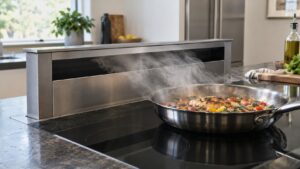
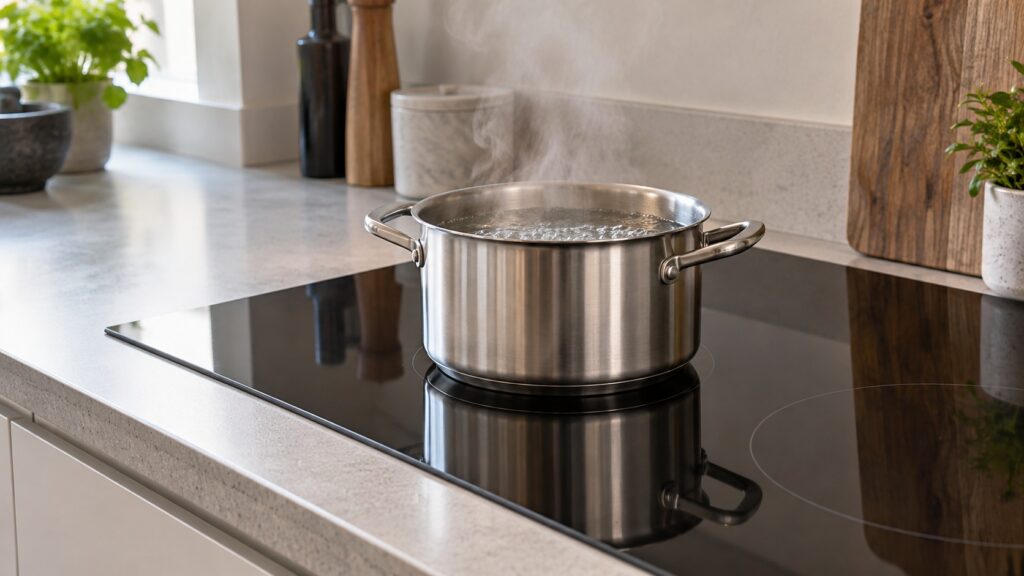
Boost mode temporarily pulls extra power into a zone to bring a large pot of water to a boil faster than the zone’s standard high setting would. It runs for a fixed window of time and then drops the zone back to its normal maximum automatically — it is not a setting to leave engaged for general cooking, and using it on a pan that does not need the extra power mostly just adds noise from the fan working harder. It earns its keep on big batches — pasta water, a stockpot — and does little for a small skillet already at a fast simmer.
Why does the cooktop surface look scratched even without visible damage?
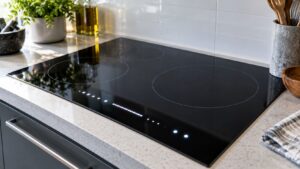
A ceramic-glass induction surface can pick up fine surface haze from cookware sliding across it, and from the wrong cleaning tools, well before any real scratch is present. Sliding heavy cast iron or a rough-bottomed pan across the glass rather than lifting and placing it is the single biggest cause of that haze building up over time. An abrasive scouring pad used on everyday cleaning does the same thing gradually — a dedicated ceramic-glass cleaner and a soft pad or cloth handle daily cleaning without adding wear. A cooktop that is wiped down with a damp cloth while still slightly warm, rather than left to cool with spatter baked on, also needs far less scrubbing at the next cleaning, which on its own reduces how much abrasion the glass sees over the appliance’s life.
What is the right way to deal with a sugar or starch spill on induction glass?
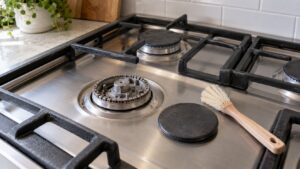
A spill containing sugar bonds to hot ceramic glass as it cools and can etch the surface if left to harden and then scraped later. The right sequence is to catch it while the zone is still on and the spill is still liquid, use a proper glass-cooktop scraper held flat against the surface, and lift the spill away before it cools rather than scrubbing at it once hardened. This applies more to induction and radiant electric than to gas, since a gas cooktop’s grates keep spills off the glass surface entirely.
Does induction cooking change how pans should be stored or handled?
Rough or worn pan bottoms — chips, burrs, or a warped base — are more noticeable on an induction cooktop than on a gas range, both because they scratch the glass faster and because a warped base can lose contact with the zone and heat unevenly. Storing induction-compatible pans so their bases do not knock against each other, and checking a pan’s base periodically for wear, keeps both the cookware and the cooktop surface performing as they should. Stacking pans with a folded towel or a purpose-made protector between each base costs nothing and prevents most of the chips and burrs that eventually scratch the glass every time that pan gets set down. It is also worth running a hand across a pan’s base every few months, since a burr too small to see can still be felt, and catching it early means retiring one pan rather than replacing an entire cooktop surface later.
What if the cooktop still misbehaves after these habits are in place?
If a compatible, correctly sized pan still fails to heat, or a zone shuts off with nothing having moved, that points toward an actual fault rather than a habit to fix. Cooktop burner won’t ignite and how induction cooktops work cover the mechanical and electronic side of that troubleshooting in more depth than habits alone can fix.
We are an independent repair company, not a factory service arm, and we will tell you when a repair is not worth doing. Pricing starts from a diagnostic visit and we confirm the estimate before any work begins. General cooktop maintenance covers the rest of the routine care an induction surface needs, and you can schedule a visit if a zone stops responding for reasons that habits alone cannot explain.