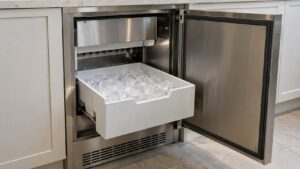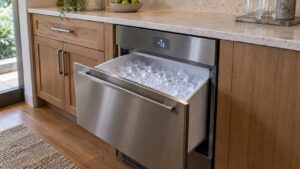
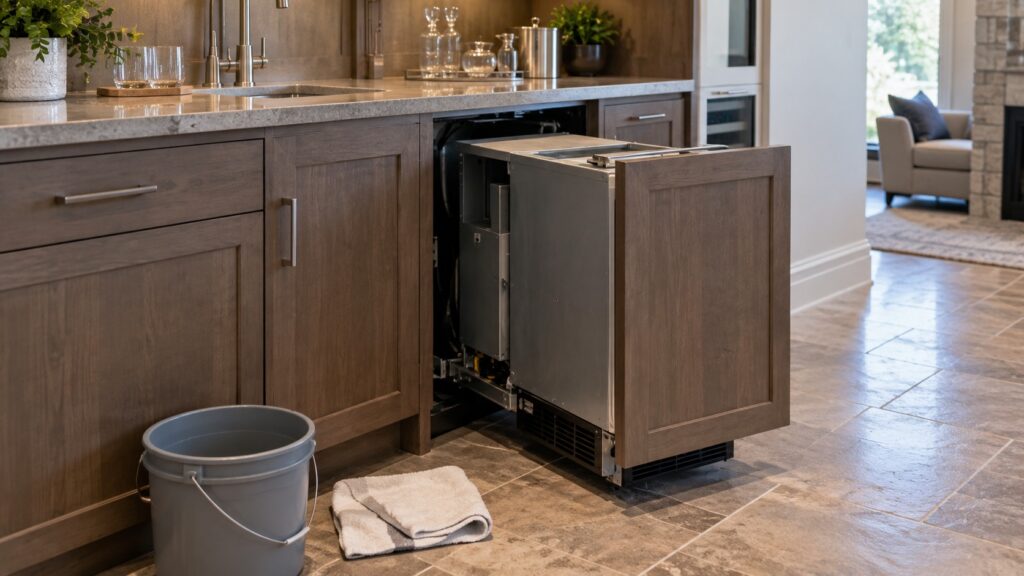
The most important decision in a Jenn-Air undercounter ice maker installation is how the water leaves the machine. The JUIFN15HX uses a gravity drain, so it needs a drain point lower than the unit’s outlet, such as a floor drain or a properly sloped line. The JUIFX15HX has a drain pump, which lifts the water up to a sink drain or standpipe. Choose the model that matches the plumbing you have, because a gravity drain cannot work against the slope of the room, while a pump model can serve a drain that sits above the machine.
What is the difference between a gravity drain and a drain pump?
An ice maker produces meltwater from the ice in its bin and rinse water during its cleaning cycle, and that water has to go somewhere. A gravity drain relies on slope alone. The drain line leaves the cabinet near floor level and runs downhill to a floor drain, a laundry standpipe or another point that is lower than the outlet on the machine. If the receiving drain is higher than the outlet, water will not leave.
A drain pump removes that limit. A small pump inside the machine pushes the water up and out, so the line can connect to a sink drain tailpiece or a standpipe above the unit. The cost of that convenience is one more motor that can fail or clog, which is why a drain fault shows up as a fault code on pump models. Our Jenn-Air ice maker DR page describes the message when water is not draining quickly enough.
Which drain should you plan for in your kitchen or bar?
Look at where the nearest drain sits compared with the bottom of the cabinet opening:
- A floor drain nearby or a drain line that can run downhill: the gravity model is simple and has fewer parts.
- A sink drain or standpipe at normal height, with a fixed countertop above: choose the pump model.
- A bar or basement where the drain is far away or uphill: choose the pump model and check the pump’s maximum lift in the installation sheet.
Local plumbing codes may also require an air gap or a certain connection type. Check with your plumber or your inspector before you cut into any existing line.
What does the cutout and the water supply need?
These units are 15 inches wide and panel-ready, so the opening has to match the dimensions in the installation instructions for width, height and depth. Allow room at the front for the door to swing and for the articulating hinge to move, and confirm that the panel you plan to use is the right weight and thickness for the hinge. Many undercounter units vent through the toe grille, so never cover or block the front vent with a cabinet panel unless the instructions say so.
The water supply is a cold line with a shutoff valve. Fit a valve within reach, flush the line into a bucket for a few seconds before connecting it, and use a filtered supply if your water is hard or has sediment, since scale and debris reduce ice quality and block the fill valve. Tighten the compression fitting snugly but not hard, because over-tightening is a common cause of slow leaks. A leak behind an undercounter machine can go unnoticed for weeks, so check the fitting after a day.
How do you connect the drain and set the unit?
- Turn off the water and power to the area and confirm the outlet is off.
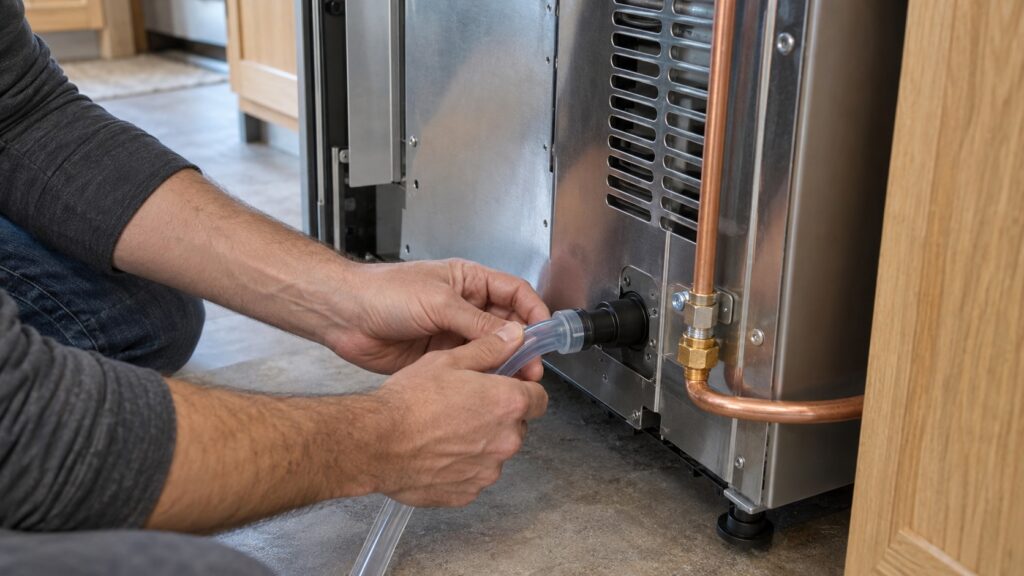
- Route the drain line first. For gravity, keep a steady downhill slope with no sags or loops where water can sit. For the pump model, follow the instructions for the discharge connection and the highest point of the line.
- Connect the water line to the inlet and check the fitting for drips when the valve is opened.
- Slide the unit into the opening slowly, without pinching the water line, the drain line or the power cord.
- Level the unit front to back and side to side, using its leveling feet, so that water collects at the drain and the door closes evenly.
- Fit the door panel and adjust the hinge so the gap is even.
- Plug in and start it. Let the machine run through its first cycles, then check the drain and the water connection for leaks.
The first batches of ice are usually discarded, since they can carry residue from the new water line and the cabinet. After that, follow the routine in our JUIFN15HX cleaning schedule, and see how to maintain your Jenn-Air ice maker for the longer routine.
What problems show up after installation?
Most early problems are installation problems, and you can trace them. If the unit makes little or no ice, check the water valve, the supply line and the fill, and read ice maker not making ice. If water pools in the cabinet, check the drain line for a sag or a kink and the compression fitting for a leak. If the display shows a code, our guide to Jenn-Air ice maker error codes separates the real faults from the reminders. A low water message such as FL means not enough water is reaching the ice-making system, which usually points back to the supply.
When should you call a technician?
Call if you are unsure about the drain slope or the plumbing code, if water appears under the machine, or if the unit will not start after a correct installation. Our Jenn-Air ice maker repair technicians check the drain, the pump and the water supply on site. We are an independent repair company, not a factory service arm, and we will tell you when a repair is not worth doing. You can book a visit and tell us which drain type your model has.