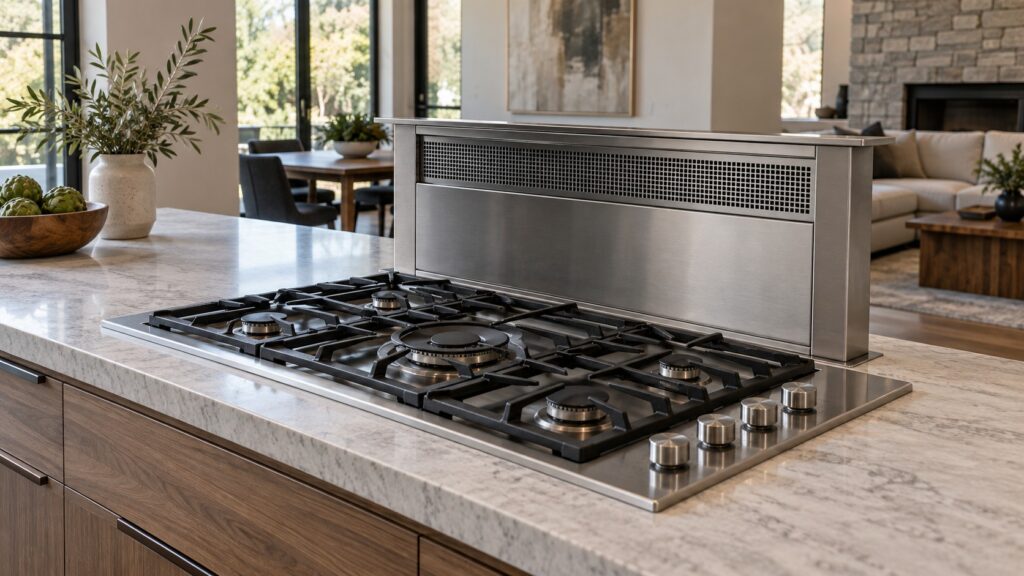
A Jenn-Air downdraft vent that will not rise is the most common complaint on the system the brand is best known for, and it is also the one most often misread. The motor that lifts the vent and the blower that moves the air are separate things, so a vent stuck down is usually a lift problem rather than a ventilation problem. This guide walks the checks in order, from the ones that cost nothing to the ones that need a technician under the counter.
Name what is actually failing
Three different faults hide behind “the downdraft does not work.” The vent will not rise at all. The vent rises but nothing is sucked in. Or the vent rises partway, stalls or drops back down. Each one points somewhere different, so establish which of the three you have before touching anything.
If the vent stays down and the blower cannot be heard either, suspect power or the control. If the vent stays down and you can hear the blower running, the lift motor or its drive is the suspect while the ventilation half of the system is proven healthy.
Power, panel and the simple causes
Start at the breaker, then look for a control lock. Cooktop control panels lock — deliberately, to stop children changing settings — and a locked panel can refuse the vent as readily as it refuses a burner. Our page on a locked cooktop control covers how that looks and how to clear it.
Wipe the panel dry and try again with a dry finger. Touch controls read moisture as a finger, and a wet cloth lying across a panel can hold a command permanently, which the appliance experiences as a jammed button.
Obstruction is the most common real cause
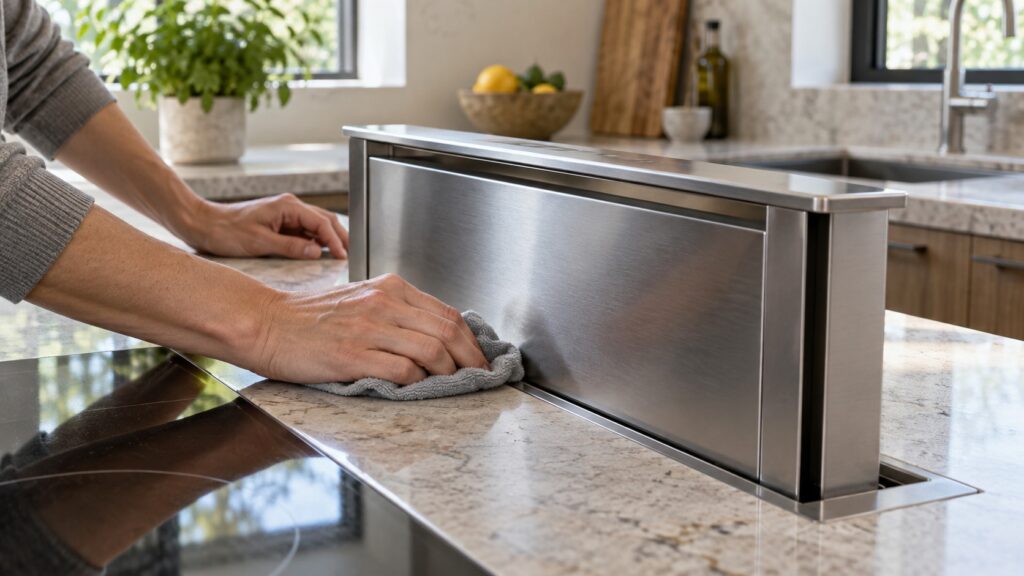
The vent tower slides in a slot, and the slot collects everything a kitchen produces: grease, crumbs, the salt that missed the pan. Over a couple of years that becomes a film that turns to glue, and the motor no longer has the strength to break it.
Clean the slot along both edges with a degreaser and a thin cloth, then wipe the sides of the tower itself where it disappears into the counter. Never force the tower up by hand while the motor is trying — you will strip the drive — but it is fair to help it gently after cleaning, with the power off, to see whether it now moves freely.
Look for a physical obstacle too, because the tower needs a clear path for its whole travel and not just at the moment it starts. A pan handle over the vent, a trivet pushed back, a cutting board resting against the tower, a jar of utensils left behind the cooktop: any of these stops a lift motor that is working perfectly well, and none of them looks like a problem until you crouch to eye level and look along the counter.
What the sounds tell you
That last row is worth patience. A vent that rises and immediately retreats is often reporting a sensing problem, not a mechanical one, and the part is usually small.
If it rises but does not pull
Now the diagnosis moves to the ventilation half. Pull the grease filters and hold them to the light — a filter that is saturated passes very little air, and it is the first thing to check on any downdraft because these systems fight physics to begin with, drawing smoke sideways and down rather than letting it rise.
Then think about the duct: downdraft ducting runs below the floor or through cabinetry, and it is longer and more turned than a hood’s run. Crushed flexible duct, a damper that has stuck shut with grease and an exterior cap blocked by a nest are the three findings that come up again and again. Our guide on how downdraft ventilation works explains why every extra elbow costs so much here.
What to avoid while you wait
Do not run the cooktop hard with the vent stuck down and the blower off, especially on gas: that is exactly the situation the ventilation exists to prevent. Do not repeatedly cycle the lift switch hoping it will free itself, because each attempt is another load on a drive that is already struggling. And do not dismantle the tower from above — the lift assembly is reached from underneath, in the cabinet, and pulling from the top bends the guides.
Routine care prevents most of this. Wipe the slot whenever you clean the cooktop, wash the filters on the same schedule as the rest of the kitchen, and the lift keeps working — the routine is in cooktop maintenance.
While you wait for a visit, cook with the windows open and the kitchen door shut if the vent is stuck down — especially on gas, where combustion products belong outside rather than in the room. If the blower still runs with the tower down, use it: some capture is better than none. And keep the cooktop area clear of anything that could be pulled toward the intake, because a vent that suddenly starts working again with a towel nearby creates a different problem entirely.
When to call
Call when the motor hums without movement after the slot has been cleaned, when you hear grinding, when the vent rises and drops repeatedly, or when nothing happens at all with a clear panel and a live circuit. The lift assembly lives under the counter behind the cabinetry, and reaching it is a job for someone who knows how the tower comes out.
We are an independent repair company and not a factory service arm. Pricing starts from a diagnostic visit, and we confirm the estimate before any work begins. Jenn-Air cooktop repair covers downdraft lift motors, blowers, dampers, switches and controls, and you can schedule a visit online.