The Jenn-Air power burner is the one most people use least well. It is bought for the promise of a fast boil, then left on maximum for everything, and the result is scorched pans and food that cooks unevenly. Used properly it is the most versatile burner on the cooktop — the one that can bring a stockpot up in minutes and then hold a sauce below a simmer. These tips cover how to get both ends of that range out of it.
Use it for volume, not for everything
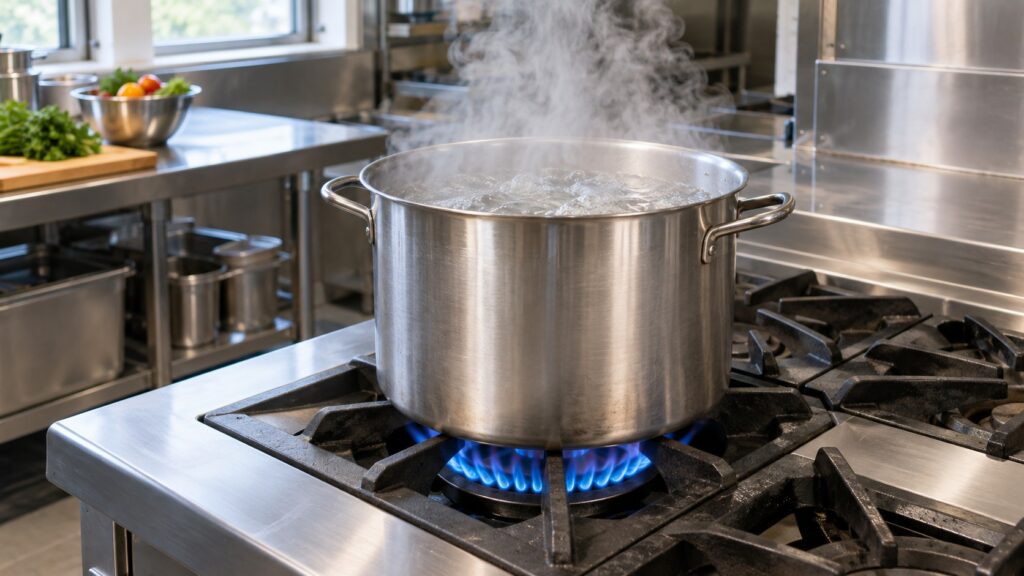
The honest job of a high-output burner is heating a lot of liquid quickly: a pasta pot, a stock pot, a canning kettle, a wok that needs to stay hot as cold food goes in. For a pan of eggs it offers nothing except a burnt edge, because the flame is wider than the base and the heat arrives faster than the food can accept it.
Start high to get there, then come down. The most common mistake is leaving the burner where it was for the boil once the food goes in — a rolling boil does not cook faster than a steady one, it just evaporates your liquid and scorches whatever settles.
The low end matters as much as the high one
On a dual-stacked burner the low setting uses only the inner ring of ports, which is what makes a genuine low simmer possible on the same burner that boils. If yours will not hold that simmer — the flame goes out, or it jumps back up — the inner ports are usually the reason, and they are the first thing to clean.
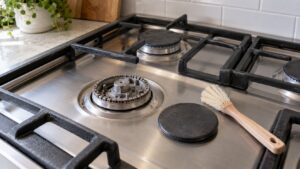
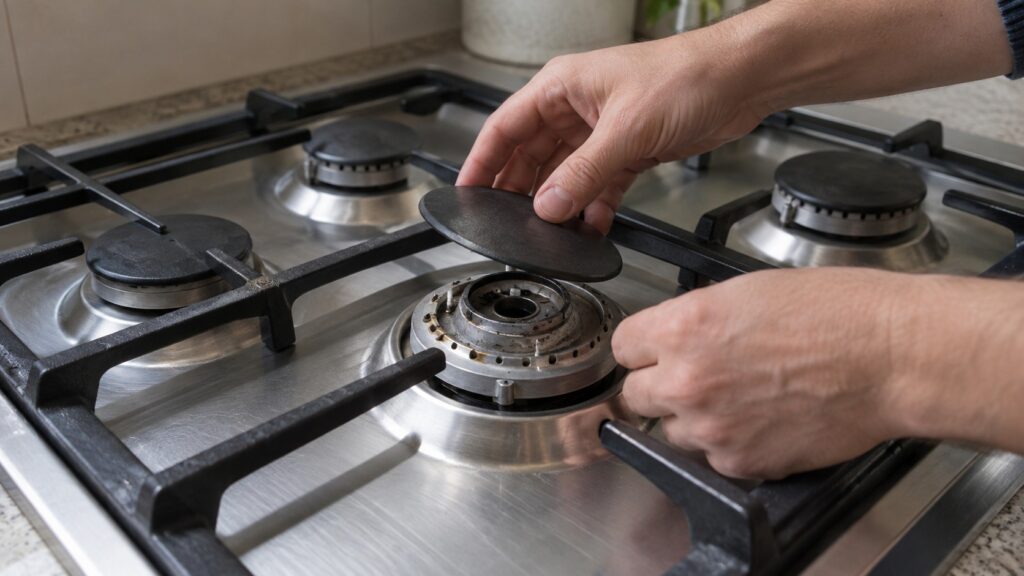
Lift the cap, brush the ports with a soft brush, and clear any blocked hole with a thin wire or a straightened paper clip rather than a toothpick, which breaks off inside. Refit the cap squarely: a cap sitting even slightly proud gives an uneven, lazy flame that looks like a gas pressure problem and is not.
Cookware makes or breaks it
A good test: with the pan on and the burner at full, look from the side. Flame should stay underneath the base. If you can see it curling up the sides, the setting is higher than the pan can use, and the extra is heating your hood and your handles instead of your food.
Two habits help more than any technique. Preheat the pan on a medium setting before turning the burner up, so the metal expands evenly and food does not stick to a cold spot in the middle. And move the pan rather than chasing the flame: on a cooktop with burners of different outputs, finishing a sauce on a smaller burner is easier than trying to hold the biggest one at its lowest setting all evening.
Reading the flame
A healthy gas flame is blue with a crisp inner cone. Yellow tips on a burner that has always been blue mean something has changed — usually a blocked port, a misplaced cap, or a pan blocking the air the burner needs to draw. Sooting on pan bottoms is the same message written on your cookware.
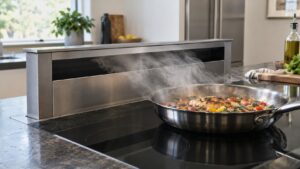
A flame that lifts away from the ports, or one that goes out when the hood is on high, is a different problem: the burner is being starved or blown. On a downdraft installation in particular, running ventilation at maximum while a burner sits at minimum can pull the flame out — a real effect, not a fault, and a good reason to use a lower fan speed for simmering.
Keeping it working
Wipe boilovers as soon as the cooktop is cool: sugary liquids bake onto burner caps and become the blockages you will be picking at next month. Wash caps and grates in warm soapy water rather than the dishwasher, where detergent dulls brass and cast iron, and dry them fully before refitting so no moisture sits in the ports.
If a burner will not light at all, that is a different sequence — igniter, electrode and gas, in order — and it is covered in our guide on a burner that will not ignite. The rest of the routine is in cooktop maintenance.
One seasonal note: if the household switches between natural gas and propane appliances — a range indoors and a grill outside, say — keep the two sets of parts and instructions separate. Orifices look almost identical and are not interchangeable, and a burner cap or orifice borrowed from the wrong appliance gives exactly the lazy yellow flame this guide has been telling you to investigate.
Finally, think about the pan you reach for most. A heavy skillet that lives on the high-output burner will scorch a delicate sauce no matter how low the flame goes, simply because the metal holds so much heat. Keeping one lighter pan for gentle work — a thin saucepan for custard or chocolate — does more for everyday cooking than any adjustment to the burner, and it is a five-dollar solution to a problem people book service calls about.
When to call
Call when a burner will not hold a low simmer after the cap and ports have been cleaned, when the flame is persistently yellow or lifting, when one burner behaves differently from the rest after cleaning, or when you smell gas at any time. A burner that has to be coaxed is usually a five-minute part, and gas is not something to experiment with.
We are an independent repair company and not a factory service arm. Pricing starts from a diagnostic visit, and we confirm the estimate before any work begins. Jenn-Air cooktop repair covers burners, valves, igniters and controls, and you can schedule a visit online.