
Jenn-Air feature names are scattered across spec sheets, showroom tags and service paperwork, and most of them name a specific piece of hardware rather than a style of cooking. Knowing which name belongs to which part is what turns a vague complaint into a booked repair with the right component on the van. This glossary covers the names that come up most on these appliances, and what each one changes when something stops working.
Cooking names
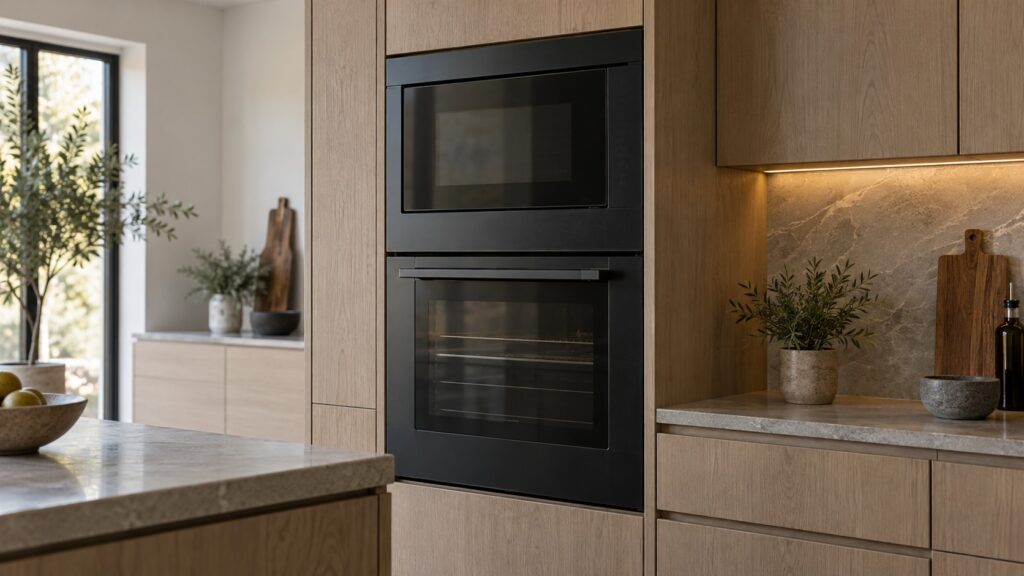
MultiMode convection. The convection arrangement in the wall ovens, including the microwave-and-oven combinations. It is a fan-and-element system, which means a convection complaint is a fan-and-element diagnosis: uneven browning across a full cavity points there long before it points at a thermostat. Our guide on vertical dual-fan convection covers how the air is actually moved.
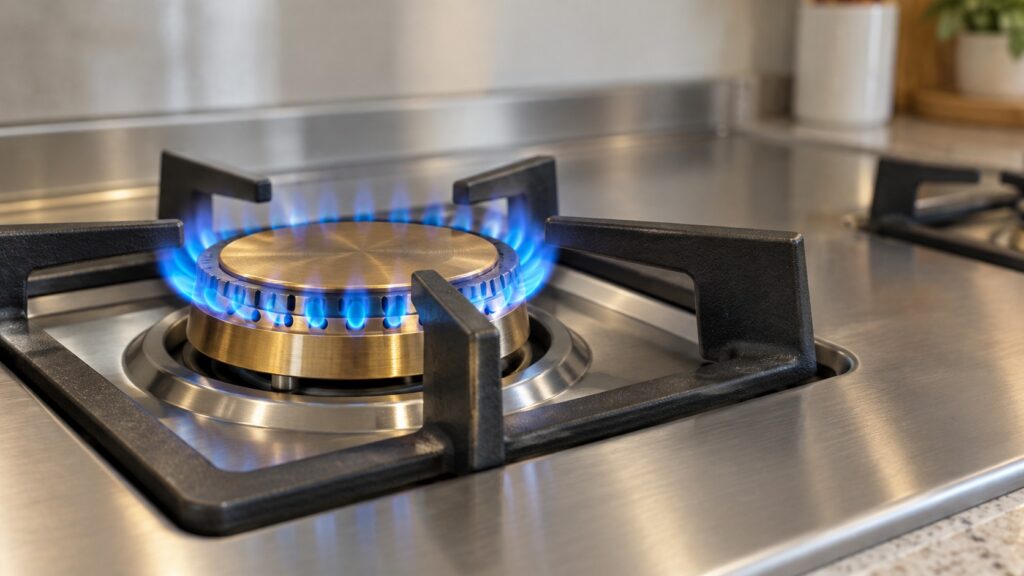
PowerBurner. The high-output burner on the gas cooktops, appearing as a dual-stacked burner on some models and a brass burner on the Euro-Style surfaces. It is the burner that boils fast and — on the dual-stacked design — is also expected to hold a genuine low simmer. A burner that will do one but not the other is a real fault rather than a limitation.
Downdraft ventilation. A vent at or near cooktop level that pulls air down and out through ducting below the floor or through cabinetry, instead of a hood capturing it above. It is the feature the brand is best known for, and it behaves differently enough from a hood to deserve its own vocabulary — covered in our guide on how downdraft ventilation works.
Refrigeration and dishwashing names
Obsidian interior. A dark interior on certain refrigeration, chosen for how it looks and how it shows contents. It is a finish, and a cooling complaint has nothing to do with it.
TriFecta wash. The dishwasher wash system that supplies three racks, including the shallow top rack. Two practical consequences: the machine must be level for water to reach all three evenly, and a wash complaint on one rack is usually a blocked arm or jet rather than a failed pump.
Smart connectivity. App control and notifications across the connected appliances. Useful for monitoring and for cycle reminders; it does not diagnose a fault, and an app alert reports a state rather than a cause. Our guide on the connected appliances explains what the app can and cannot see.
Dual-stacked burner. A burner with two rings of flame ports fed by a single valve, arranged so the low setting uses only the inner ring. It is how a burner can boil a stockpot and then melt chocolate without a diffuser, and it is why a dual-stacked burner has more to go wrong than a plain one: the low ring has its own small ports, and those are the first to block.
Sealed burner. A burner whose base is sealed to the cooktop surface, so a boilover stays on top instead of running into the appliance. It changes cleaning more than cooking, and it is the reason a modern gas cooktop is wiped rather than dismantled after a spill.
Names that describe styling
This matters in a parts conversation more than it looks. Trim, glass and handles differ between expressions while the elements, fans and boards may not, so a part that fits one appearance does not necessarily look right on the other. The model number settles it, and our guide on Rise versus Noir covers the choice itself.
Model numbers are the real vocabulary
The prefixes carry more information than any feature name. A JJW number is a wall oven, a JGC number is a gas cooktop, a JMW number is a microwave-and-oven combination — and the digits that follow give the size and the expression. When ordering a part or booking a visit, the full model number off the rating plate removes every ambiguity that the marketing names create.
Find it before you call: inside the door frame on an oven, under the lid or on the underside of a cooktop, on the inner wall of a refrigerator, on the door edge of a dishwasher. Photograph it once and keep the photo.
Using the names to describe a fault
Three examples that book the right visit. “The PowerBurner lights but will not hold a simmer” — a valve or an orifice on one specific burner. “The MultiMode convection fan is noisy and baking has gone uneven” — one fan motor. “The top rack comes out dirty while the other two are fine” — an arm or jet feeding that rack.
Compare those with “the oven is broken,” “the cooktop is not right” or “the dishwasher does not clean.” All three are true, none of them names a part, and each one costs a diagnostic visit that could have arrived already knowing the answer.
A last word on where the names live. Feature names appear on the appliance, in the app and on the retailer’s page, and all three can be out of date for the unit in your kitchen — a line gets renamed, a feature moves between series, a retailer copies old text. The rating plate does not change. When a name and a model number disagree about what an appliance has, believe the plate and the manual that matches it.
When to call
Call when a named feature stops doing what it is described as doing — a burner that will not simmer, a convection fan that has become noisy, a downdraft that no longer clears steam, a rack that stays dirty — or when you are unsure which model you own before ordering a part.
We are an independent repair company and not a factory service arm. Pricing starts from a diagnostic visit, and we confirm the estimate before any work begins. Jenn-Air oven repair covers elements, convection fans, sensors and controls, and you can schedule a visit online.