
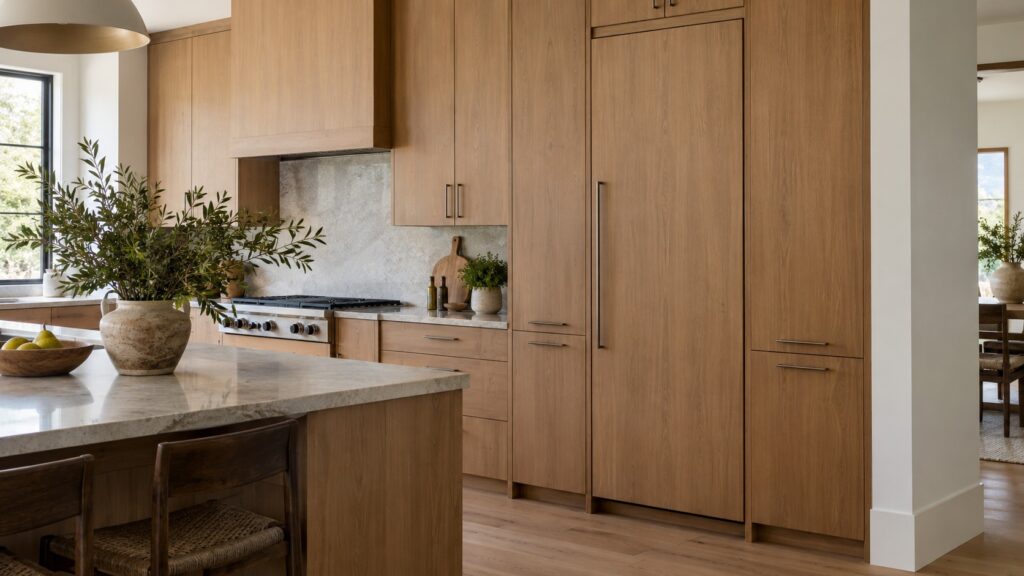
The Jenn-Air panel-ready refrigerator repair or replace decision is a different question from the one for a freestanding refrigerator, because a panel-ready column sits inside custom cabinetry and wears a custom door panel. Replacing it means a new unit that fits the same opening, a decorative panel that has to be removed from the old door and refitted to the new one, and in some kitchens trim and cabinet changes. Repair usually avoids all of that. This guide explains how to weigh the two for panel-ready column models such as the JBRFR24IGX, JBRFR30IGX and JBRFL36IGX, which problems are usually worth repairing, and when replacement makes more sense.
Why is a panel-ready refrigerator repair or replace decision different?
A freestanding refrigerator can be pulled out and swapped without touching the cabinets. A panel-ready one is built into the cabinets. Our refrigerator installation guide explains that a built-in or panel-ready unit becomes part of the cabinetry: it needs airflow the cabinet provides, a water supply run before the surround is closed, and a door alignment that matters once a heavy panel hangs on it. That means the cost of replacing is not only the appliance. It includes the removal and refitting of the panel, any changes to the opening and the time of an installer, and the risk that the new unit does not match the old one’s dimensions, hinge side or panel mounting.
Which problems are usually worth repairing?
- Door seal problems. A worn or loose seal lets in warm air and causes frost and condensation. Our dE code page says a door that is not registering as fully closed can come from an obstruction or a failing seal.
- Evaporator fan. Our FF code page says cold air is not reaching either compartment because the freezer’s evaporator fan has quit. A fan is a replaceable part.
- Temperature sensors and controls. A drifting sensor or a control fault is small compared with the cost of a new column.
- Ice maker, water filter housing and lighting parts. These are common and repairable.
Our guide to refrigerator repair or replace says non-sealed problems are almost always worth fixing, and that sealed-system failures on an older unit are the category where replacement often wins. That framework applies here too.
When does replacing a panel-ready refrigerator make more sense?
Replacement becomes more likely when the sealed system has failed on an older unit, when several unrelated parts have failed in a short time, or when the cabinet or panel has been damaged by long-term leaking. It also makes sense if you were planning a kitchen change anyway. In those cases, match the new unit to the opening before you order: width (24, 30 or 36 inches on our pages), height, depth and the hinge side. Our built-in versus freestanding refrigerators guide explains why changing the type of refrigerator in an opening is a bigger job than swapping like for like. Do not assume a freestanding model can replace a built-in column without cabinet work.
What does the panel add to a repair?
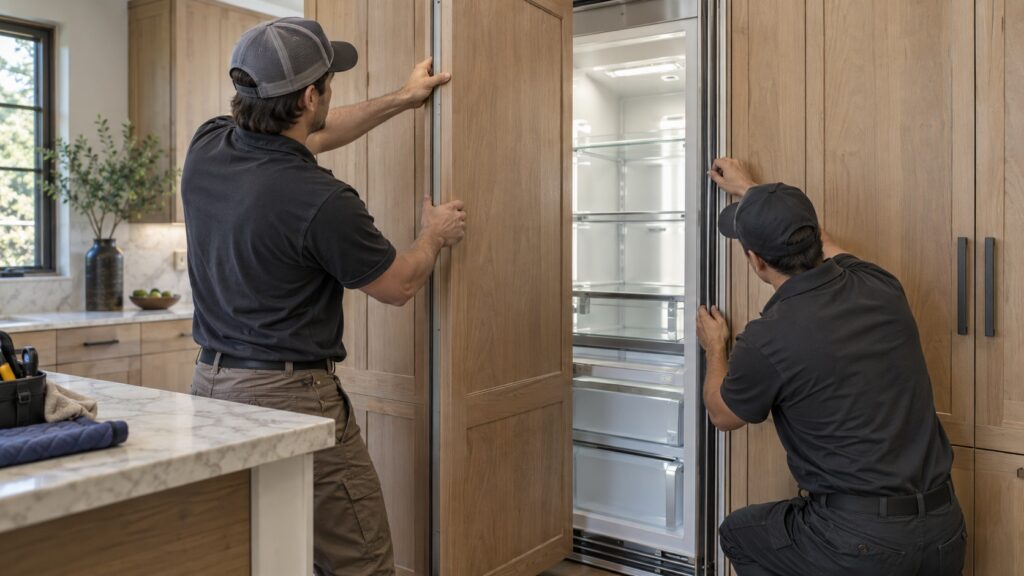
A panel-ready front adds work to any repair that needs access to the door or the interior. The panel may have to come off the mounting frame, and it has to be reattached so the reveal lines stay even. A heavy custom panel often needs two people. That can make the visit longer than one on a stainless unit, but it is not a different repair. Do not remove the panel yourself; a panel that drops can damage the cabinets and the door. When you book service, tell the technician what the panel is made of and whether the unit is a left or right swing.
What should you check on your own unit before calling?
A few observations make the diagnosis faster. Note whether both compartments are warm or only one, whether the display shows a code, and whether you can see frost on the back wall. Check that the door closes fully and that nothing in the door bins or drawers holds it open. Feel along the seal for gaps or a lifted edge. Look at the toe grille at the bottom, which our installation guide says is usually the whole story for airflow: if trim, flooring or the panel blocks it, the unit cannot reject heat. Write the full model number from the rating plate, and note whether the door is a left or right swing.
How do you decide, step by step?
- Write down the symptom, any code on the display and when it started.
- Check food safety. If the refrigerator is not holding temperature, move food to a cooler and keep perishable food above 40°F for no more than about four hours.
- Get the cause diagnosed before you shop. The actual failed part decides the answer.
- Ask what a repair would involve and compare it with the whole cost of replacing, including the panel, the installer and any cabinet work.
- Consider the age, the warranty status and how long you plan to keep the kitchen.
Switch the refrigerator off at the breaker if you see water near electrical parts or smell burning. Do not open the cabinet around the unit yourself. Our Jenn-Air refrigerator repair technicians diagnose first and replace only the part that has failed, and we confirm the estimate before any work begins. We are an independent repair company, not a factory service arm, and we will say so when a repair is not worth doing. For what affects the price, see refrigerator repair costs. When you are ready, book a visit.