

TL;DR: The Jenn-Air refrigerator door seal is a flexible gasket that presses against the cabinet to keep cold air in and humid air out. When it gets dirty, stiff or torn, you may notice warm food, frost, damp spots, a compressor that never rests or a dE message on the display. Clean it with mild soap and warm water, test it with a strip of paper, make sure nothing holds the door open, and replace the gasket if it is torn or no longer springs back.
Why does the door seal matter so much on a Jenn-Air refrigerator?
A refrigerator does not make cold; it removes heat. If the door seal lets warm, moist air creep in along even a short stretch of the edge, the refrigerator has to remove that heat again and again. The compressor runs longer, frost builds near the leak, the evaporator works harder, and food near the door warms up first. Because the effect is gradual, owners often blame the thermostat or the compressor long before they think about a strip of rubber.
It matters even more on a built-in column. A Jenn-Air column such as the JBRFR24IGX carries a custom panel on the door, and that added weight makes alignment and a good seal more demanding. A column that has settled slightly, or whose panel pulls the door out of square, can leave a gap that does not look like a gap.
How do you clean the seal properly?
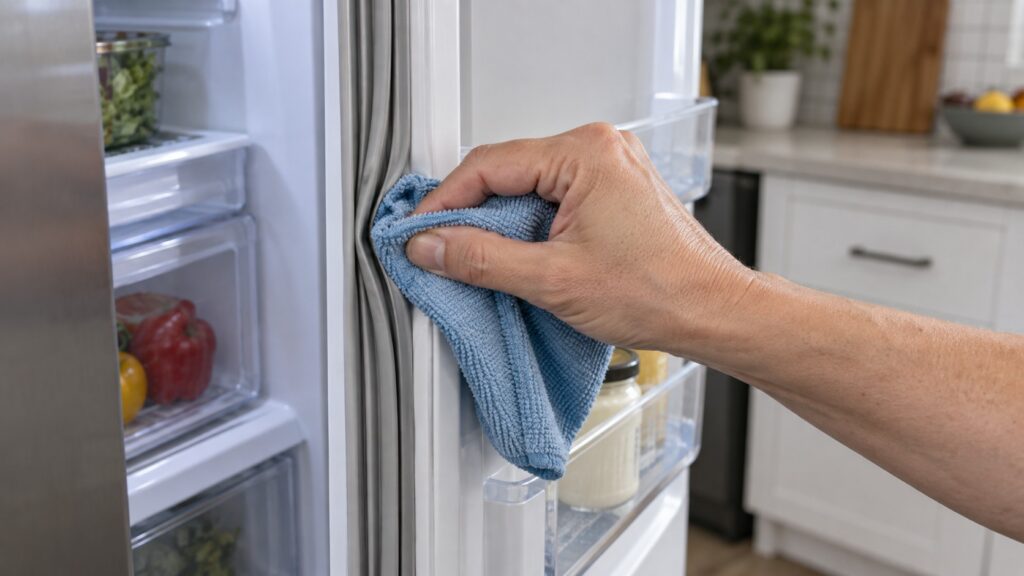
Food residue is the most common reason a good gasket stops sealing. Spilled juice dries into a sticky strip, the rubber sticks to the cabinet, and each time you open the door a small piece of the surface is pulled off. The remedy is regular cleaning:
- Mix a little mild dish soap into warm water.
- With a soft cloth or sponge, wipe the entire gasket, working into the folds with a cotton swab or an old toothbrush.
- Wipe the cabinet face where the gasket meets it.
- Rinse with a cloth dampened in clean water, then dry both surfaces completely.
Skip harsh solvents and abrasive pads, because they dry out and scratch the rubber. Do it every few months, and immediately after a spill. If you also give the whole appliance its seasonal routine, our refrigerator maintenance guide lists the rest.
How can you tell whether the seal is still working?
Two simple checks cost nothing. First, look: the gasket should be soft, evenly shaped and free of tears, gaps or flat spots, and it should hold against the cabinet all the way around. Second, test: close the door on a strip of paper, then pull the paper gently. Try several places around the door, including the corners and the hinge side. If the paper slips out with no drag at one spot, the seal there is weak. A weak spot can come from a hardened gasket, a warped door or a door that is not level.
Also check what holds the door open. A shelf bin that is overfull, a tall bottle on the door shelf or a drawer that is not pushed in can stop the door from closing flush, and the door-position sensor may report that the door is not properly closed. On our site, dE means a door is not registering as fully closed, from an obstruction or a failing seal, and DI means the door has been open long enough to trigger the ajar alarm.
Moisture is a clue to read as well. Water beads or frost that appear along one edge of the door, or a patch of the cabinet that feels damp, show where humid air is getting in. A gasket that is clean and soft but still leaks at one corner often means the door has sagged slightly on its hinges, which is an adjustment, not a part. Note which corner it is before you call; that detail saves a technician time.
What if the refrigerator is warm but the seal looks fine?
A good seal does not guarantee good cooling, so keep an open mind. If the gasket passes both tests and the refrigerator still runs warm, move on to the broader diagnosis in refrigerator not cooling, or the model-specific JFFCC72 running too cold article if your problem is the opposite. Level matters too: the fridge should sit level or tilt very slightly back so the door swings shut and stays shut. Our refrigerator installation and setup guide covers leveling and clearances, and built-in versus freestanding refrigerators explains why built-ins are fussier about alignment.
When should you replace the gasket?
Replace it when it is torn, cracked, permanently flattened or so hard that it no longer springs back, and when cleaning does not restore the paper test. Replacing a gasket is a small repair compared with the cost of a compressor that has been overworked for years, and it is far smaller than replacing the refrigerator; our refrigerator repair or replace guide gives the bigger picture. On a panel-ready column, the job also involves checking door alignment and hinge adjustment, so it is often worth letting a technician do it. Our Jenn-Air refrigerator repair page explains the visit, and you can book a visit with your model number.