This guide covers Maintain Your Jenn-Air Range with practical, technician-backed advice.
This guide covers Maintain Your Jenn 3 with practical, technician-backed advice.
This guide covers Jenn-Air Maintain Jenn 3 with practical, technician-backed advice.
Understanding the Maintain Your Jenn-Air Range
Below, our specialists break down everything you need to know about the Maintain Your Jenn-Air Range.
Understanding the Maintain Your Jenn 3
Below, our specialists break down everything you need to know about the Maintain Your Jenn 3.
Understanding the Jenn-Air Maintain Jenn 3
Below, our specialists break down everything you need to know about the Jenn-Air Maintain Jenn 3.
Adjusting the Routine to How You Cook
A household that cooks daily with high-heat searing or frequent boilovers needs more frequent burner and oven attention than one that cooks lightly a few times a week. Rather than following a rigid calendar, let visible buildup and any change in flame color or baking evenness guide when to step up cleaning frequency, since real-world usage varies far more between households than any single generic schedule can account for.
Treat the Range as Two Systems Under One Roof
Because a Jenn-Air range pairs gas or electric burners with a full oven cavity and, on many models, a shared electronic control board, an effective maintenance routine has to address the cooktop surface, the oven interior, and the control electronics separately rather than treating the appliance as a single unit. Neglecting one section — say, focusing only on oven cleaning while ignoring burner ports — leaves the range vulnerable to failures in whichever area gets skipped.
Burner and Grate Care
Remove grates and burner caps regularly to wash them and clear the small ignition ports of any dried spill residue, using a fine pin rather than anything that could break off inside the port. Dry every piece completely before reassembly, since trapped moisture near the igniter is a leading cause of clicking-but-not-lighting complaints. On electric and induction ranges, wipe the cooktop surface with the cleaner appropriate to that surface type after every use involving a spill.
Oven Cavity and Self-Clean Cycles
Run the self-clean cycle on a regular schedule rather than letting spills accumulate for months, and remove oven racks first unless your specific model states otherwise, since the high heat of self-clean can discolor rack coatings. Keeping the oven temperature sensor probe and bake element free of caked-on residue helps both maintain accurate temperature readings and prevent the uneven baking that dirty components can cause over time.
Control Panel and Keypad Protection
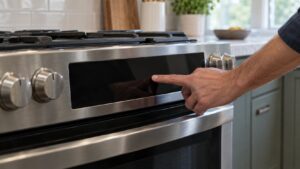
Wipe touch control panels with a barely damp cloth and dry fully; never spray cleaner directly onto the panel, since pooled liquid seeping behind the membrane is a documented cause of shorted-keypad failures on Jenn-Air ranges. If your range has physical knobs, remove them periodically to clean both the knob and the switch stem behind it, since spills running down around the knob shaft are a common path for moisture-related electrical problems.
Ventilation Considerations
If your range includes or sits beneath downdraft or overhead ventilation, keep the grease filters clean on the schedule recommended in your owner’s manual. A clogged filter forces the ventilation motor to work harder and can allow more grease to settle on the range’s own control components over time, indirectly shortening their life.
Periodic Function Checks
Every few months, confirm every burner ignites promptly with a steady flame (yellow or orange flames warrant attention), test that the oven reaches its set temperature within a reasonable time, and watch for any error codes appearing on the digital display, since catching an intermittent code early is often easier to diagnose than waiting for a full failure.
Keeping Documentation Handy
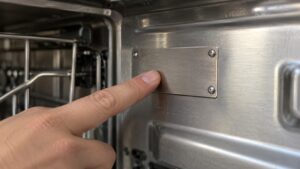
Store your range’s model and serial number, usually found on a label inside the door frame or on the back panel, somewhere easy to find, since having it ready speeds up parts ordering considerably when a repair is needed. Noting the approximate date of your last self-clean cycle and burner deep-clean alongside this information gives a technician useful context about the range’s maintenance history during a service visit.
When to Bring in a Specialist
Good maintenance habits meaningfully reduce how often burners, control boards, and oven components fail, but they don’t eliminate wear entirely. If you notice an error code, an unresponsive control, or a burner that’s become harder to light despite clean ports, check our range error code library or our range repair service. Schedule a maintenance visit, and confirm care recommendations for your specific range on jennair.com.