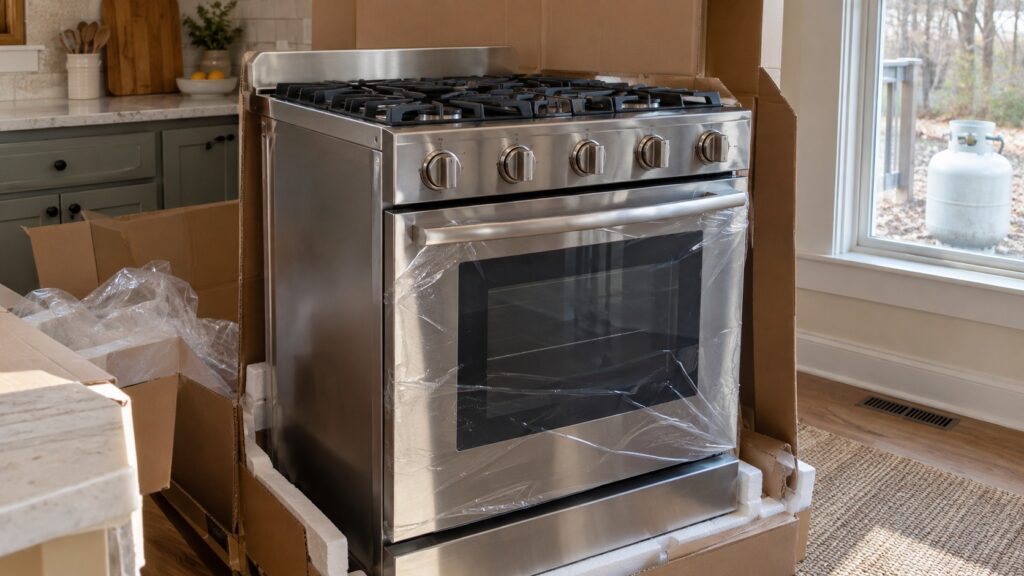
A Jenn-Air gas range leaves the factory set up to burn natural gas. A Jenn-Air gas range LP conversion is a defined step in the installation, not an afterthought, and it has to happen before the range is connected to a propane line — never as a fix after burners start acting up on the wrong fuel. Every part of the swap is specific to the model, and getting it right the first time saves a second visit once the range is already sitting in its final position against the wall.
Does a Jenn-Air gas range need a conversion kit for propane?
Yes. Natural gas and propane deliver a different amount of energy per cubic foot at a different line pressure, so the same burner orifice that is correctly sized for natural gas delivers too much fuel on a propane line. A dedicated liquid-propane conversion kit swaps in smaller orifices sized for propane’s higher energy density, and on many models it also resets the pressure regulator to the propane specification. Skipping the kit and running a range on the wrong fuel setting produces burners that flare too large, soot the cookware, and waste gas.
Where do the orifices actually get changed?
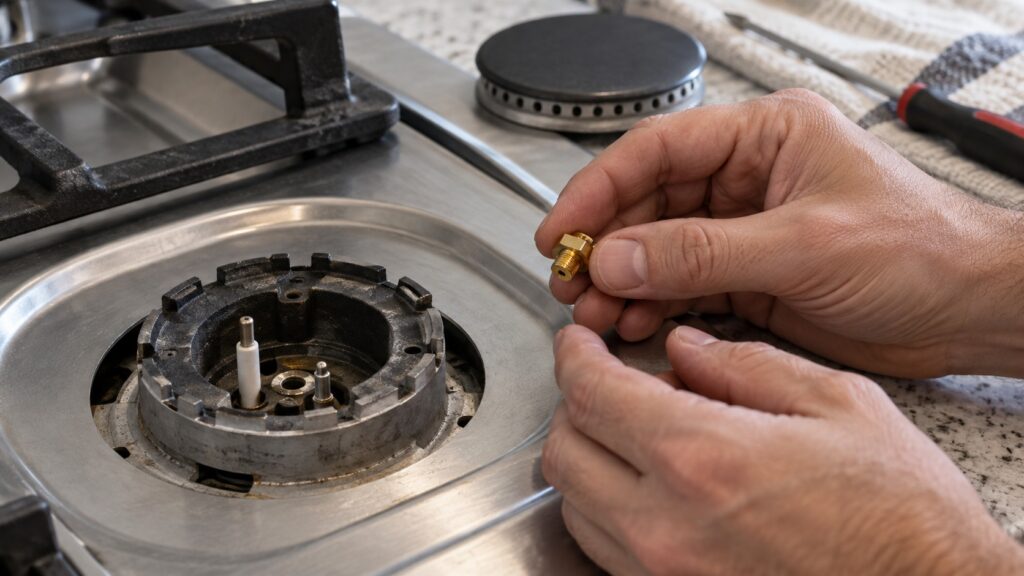
Each surface burner has its own orifice — a small brass fitting at the base of the burner where the gas line meets the burner body — and the oven burner has a separate one of its own. A liquid-propane kit for a Jenn-Air range includes an orifice sized for every burner on that model, plus the oven burner, because they are not interchangeable between burner sizes. Installing the wrong orifice on the wrong burner position is a common mistake when the swap is rushed, and it shows up later as one burner running noticeably richer or leaner than the others. Labeling each orifice as it comes out, or working through the burners one at a time rather than pulling every orifice before installing any replacement, keeps that mix-up from happening on a range with several burner sizes on the cooktop.
The oven burner sits in a less visible spot, usually at the back of the oven cavity behind a baffle, and it is easy to forget during a conversion focused on the visible cooktop burners. A range that has had its cooktop converted but not its oven burner will show correct flames on the surface and a yellow, sooty flame the first time the oven is used — a sign the conversion was only partly completed rather than a sign the kit itself was wrong.
What has to happen before the propane line is connected?
Fuel-type conversion is not a step that can be done after the range is already hooked up and running. The sequence that keeps the installation safe is: unpack and position the range, complete the orifice and regulator conversion for propane while the unit is not yet connected to gas, then make the gas connection, then test every burner for a clean blue flame with the cabinet lit or the room otherwise dark enough to see the flame color clearly. A yellow-tipped flame at that test point means the conversion was not completed correctly, and the range should not be put into regular use until it burns clean.
What clearances and venting still apply on a propane installation?
Propane and natural gas share the same requirements around the range itself: clearance to combustible cabinets on either side, clearance above the cooking surface if a range hood or microwave sits over it, and a code-compliant shutoff valve within reach behind or beside the unit. None of that changes with the fuel type. What is specific to propane is that the tank or supply line sits outside the structure in most installations, and the line pressure at the range’s own regulator has to match what the conversion kit was designed for — a mismatch there is a separate fuel-supply issue, not something the burner conversion fixes.
Can a household switch a range back to natural gas later?
Yes, if the original natural-gas orifices and regulator parts were kept rather than discarded during the propane conversion. Reversing a conversion means putting those original parts back and confirming the flame test again on the new fuel supply. Losing the original orifices means ordering a full natural-gas conversion kit for the model, which takes longer and costs more than simply keeping the parts the first time around.
What if a burner acts up after a propane conversion?
A burner that will not light, lights unevenly around the ring, or keeps a yellow flame after conversion usually points at one misplaced orifice or a regulator that was left on the natural-gas setting. Cooktop burner won’t ignite covers the general ignition checks that apply whatever the fuel type, and they are the right starting point before assuming the conversion itself failed.
For range fuel decisions made before a purchase rather than after, choosing the right range fuel type lays out how gas, electric and dual-fuel ranges differ, which is a separate question from converting a gas range between natural gas and propane once it is already the fuel type chosen.
Should a homeowner do a propane conversion themselves?
Jenn-Air documents the orifice sizes and regulator settings for each model’s conversion kit, and a confident do-it-yourselfer with the correct kit and a manometer to check line pressure can complete the swap. The step that most often goes wrong without professional tools is verifying actual gas pressure at the regulator rather than assuming the kit alone is enough — a regulator that is not set correctly for propane will not be caught by eye, only by measurement. If a manometer is not available, or the range is a dual-fuel or professional-style model with more than one regulator to adjust, having a technician complete the conversion and pressure-test it removes the guesswork.
We are an independent repair company, not a factory service arm, and we will tell you when a repair is not worth doing. Pricing starts from a diagnostic visit and we confirm the estimate before any work begins. Range installation and setup covers the rest of what a new range needs beyond fuel conversion, and you can schedule a visit for a propane conversion or a full new-range installation.