
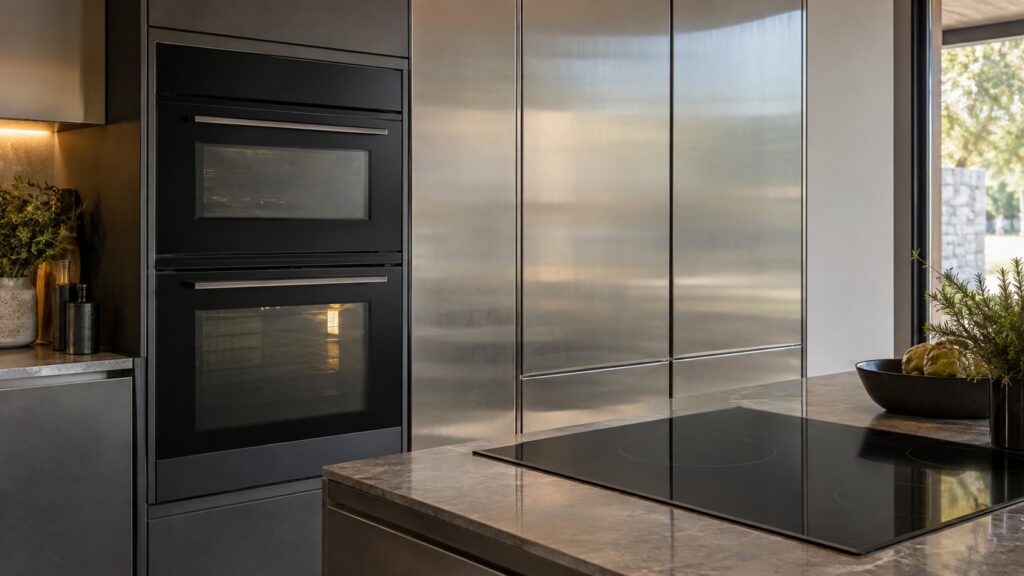
Caring for Jenn-Air Rise and Noir finishes is a smaller subject than caring for the machinery underneath, and it generates more regret. Stainless and matte black are both easy to keep looking new and both are easy to ruin permanently in a single afternoon with the wrong cloth or the wrong spray. This guide covers what each finish is, what to use on it, what to keep away from it, and how to deal with the marks that appear anyway.
Stainless: the grain is everything
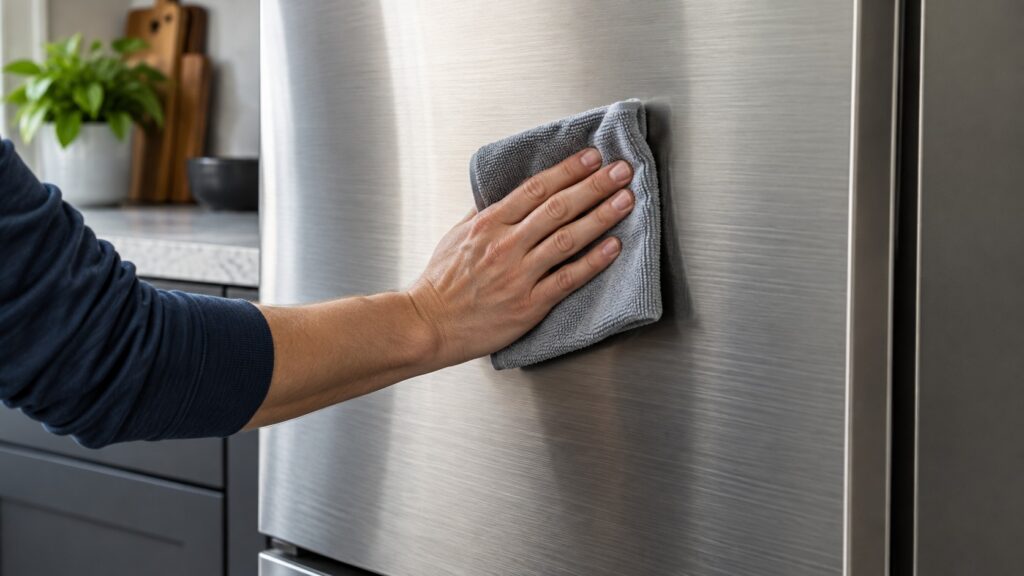
Brushed stainless has a direction to it. Wipe along that grain and marks lift away; wipe across it and you polish fine lines into the surface that catch light forever after. Look closely at a door before you start — on most appliances the grain runs horizontally on doors and vertically on handles, and it can change direction between panels.
For daily marks, a damp microfiber cloth and a dry one are enough. For greasy film, warm water with a drop of dish soap, then dry immediately, because water left to evaporate is what leaves the spots people then try to scrub off.
Stainless polish has its place — a light coat once in a while evens out the appearance and makes the next wipe easier. Use a product meant for appliances, apply it sparingly along the grain, and buff it dry. Too much polish leaves a film that attracts every fingerprint in the kitchen.
Matte black and black glass
Matte finishes hide fingerprints and show everything else. The rules are simpler and stricter: soft cloth, warm water, minimal pressure, dry immediately. No abrasive of any kind, ever — a matte surface cannot be buffed back the way a glossy one sometimes can, and a scuff is permanent.
Black glass panels take the same approach with one addition: work in straight passes rather than circles so that any residual streaking runs with the light rather than swirling in it. Glass cleaner is acceptable on glass but keep it off adjacent matte and stainless surfaces, and never spray anything directly at a control panel — spray the cloth instead.
What ruins these finishes
One more everyday hazard: the towel hanging over a handle. It traps moisture and whatever was on it — tomato sauce, lemon juice, salt — against the metal for hours. Those acids and salts are exactly what leave the marks people assume are permanent defects in the steel.
Hard water deserves a mention alongside the cleaners. In a kitchen where the tap water leaves white marks on glassware, it leaves the same mineral film on appliance doors, and that film builds up invisibly until the surface looks dull rather than spotted. The answer is not a stronger cleaner but drying: wipe the surface dry after every wash rather than letting droplets evaporate where they fall. Where a film has already built up, a cloth dampened with equal parts white vinegar and water lifts it — then rinse with clean water and dry immediately, because vinegar left on stainless is its own problem.
Rust spots on stainless are usually not rust
Orange specks on a stainless door are typically iron particles that landed there from elsewhere — a cast iron pan, steel wool used nearby, construction dust — and began rusting on the surface rather than in it. They lift with a non-abrasive stainless cleaner and a soft cloth, working along the grain.
If a mark does not lift, stop rather than escalating. Increasing the abrasion is how a removable stain becomes a permanent scratch, and a technician with the right product costs less than a replacement door panel.
A rhythm that keeps it simple
Wipe handles and around the door edges every few days — that is where hands actually touch. Do the full front of each appliance weekly with soap and water, drying immediately. Deal with spills on a cooktop fascia as soon as the surface is cool, because sugars and acids left to bake on are the ones that etch.
The rest of the routine belongs to the appliances themselves: gaskets, filters, vents and interiors. Our guides on refrigerator maintenance and range maintenance cover those, and there is a good argument for doing the exterior on the same day so it becomes one habit rather than several.
If you are still choosing
Both finishes are durable when they are cleaned kindly. Stainless is more forgiving of a mistake, because minor marks can often be evened out; matte black is more forgiving of daily life, because it hides fingerprints that stainless displays. Households with small children and a busy kitchen usually prefer matte for that reason, and our guide on Rise versus Noir covers the wider decision.
One habit protects both finishes better than any product: use a separate cloth for appliances. The cloth that wiped a cast iron pan or a gritty countertop carries exactly the particles that scratch stainless and matte black, and nobody notices until the light falls the right way. Keep two microfiber cloths in a drawer — one damp, one dry — wash them without fabric softener, and they will outlast several bottles of cleaner.
When to call
Call when a panel is damaged rather than dirty, when a handle is loose, when a door no longer sits square in its opening, or when a control panel has stopped responding after a cleaning product found its way onto it. Panels and fascias are replaceable parts, and a professional opinion on whether a mark is surface or structural is worth having before anyone tries harder.
We are an independent repair company and not a factory service arm. Pricing starts from a diagnostic visit, and we confirm the estimate before any work begins. You can schedule a visit online.