
This guide covers Energy-Saving Tips For Jenn-Air Kitchen with practical, technician-backed advice.
This guide covers Jenn-Air Energy with practical, technician-backed advice.
Cutting energy use on Jenn-Air kitchen appliances mostly comes down to changing a handful of daily habits — how you preheat, how full you run the dishwasher, and how well your refrigerator’s seals and coils are maintained — rather than needing new equipment, since most of the savings potential is already built into appliances you own.
Understanding the Energy-Saving Tips For Jenn-Air Kitchen
Below, our specialists break down everything you need to know about the Energy-Saving Tips For Jenn-Air Kitchen.
Understanding the Jenn-Air Energy
Below, our specialists break down everything you need to know about the Jenn-Air Energy.
Cooking Appliances
Induction cooktops are inherently more energy-efficient than gas or standard electric because heat transfers directly into the cookware rather than warming the surrounding air or cooktop surface first. If you already own an induction cooktop, using matched pan sizes to the heating zone maximizes that efficiency further. For ovens, avoid unnecessary preheating time beyond what a recipe requires, and use convection settings like V2 Vertical Dual-Fan Convection where appropriate, since convection cooking is often faster and more evenly distributed than standard bake, meaning less total energy spent per dish. Opening the oven door repeatedly during cooking lets significant heat escape and forces the element to work harder to recover temperature, so resist the urge to check frequently.
Refrigeration
A refrigerator or column runs most efficiently when its door seals are clean and intact, its condenser coils are free of dust, and it isn’t overloaded or nearly empty (either extreme makes the compressor work harder to maintain a stable internal temperature). Check door gaskets periodically for gaps by testing whether a piece of paper slides out easily when the door is closed on it — if it does, the seal likely needs replacement. Keep refrigeration units away from direct heat sources like ranges or ovens, since ambient heat forces the compressor to run more often than necessary.
Dishwashers
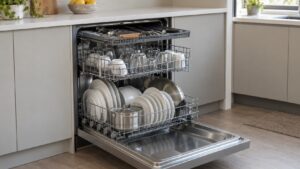
Running a Jenn-Air dishwasher with TriFecta wash technology on a full load rather than half-empty makes better use of the water and energy spent per cycle. Skip pre-rinsing dishes under the tap when possible — modern wash systems are designed to handle typical food residue without a manual pre-rinse, and doing so anyway wastes water without improving results. Air-dry or low-heat dry settings, where available, use meaningfully less energy than high-heat drying cycles.
Ventilation and Cooktop Habits
Downdraft or hood ventilation should run only as long as actually needed during and shortly after cooking rather than for extended periods afterward. Matching burner or induction zone size to the pot or pan being used prevents wasted heat around the edges of undersized cookware on a larger burner.
Smart Features and JennAir Connect
If your appliances include JennAir Connect Wi-Fi connectivity, use the companion app’s monitoring features to catch a refrigerator door left ajar or an oven left on longer than intended — both are common, avoidable sources of wasted energy that go unnoticed without a notification. Scheduling delayed dishwasher cycles for off-peak utility hours, where your utility offers time-of-use rates, can also reduce cost even if it doesn’t reduce total energy consumed.
Maintenance That Pays Off
- Vacuum refrigerator condenser coils twice a year to keep the compressor from overworking.
- Replace worn door gaskets promptly rather than letting cold air leak out continuously.
- Clean dishwasher filters regularly so the wash pump doesn’t compensate for restricted flow with longer cycles.
- Have gas burners serviced if flames burn yellow or uneven, which wastes fuel compared to a clean blue flame.
Manufacturer efficiency ratings and specific model energy guides are available at jennair.com. If an appliance seems to be running longer or louder than it should despite good habits, that’s often a sign of a developing mechanical issue rather than normal wear — see our error code reference or schedule a diagnostic visit before energy bills climb further.
When Efficiency Problems Point to Repair
If you’ve adopted these habits and your energy costs still seem high relative to appliance age and usage, a failing door seal, a dirty condenser, or a struggling compressor could be the cause. These are diagnosable issues, and catching them early is usually far less costly than waiting for a full breakdown. Browse our repair services for details on refrigeration and cooking appliance diagnostics.