TL;DR: The Jenn-Air JGC3536GS lights each burner with single-point electronic ignition and watches the flame with a sensing system that can re-ignite it. When you turn a knob, gas flows and the igniter by the burner throws a spark; once the flame is detected the sparking stops, and if the flame blows out the system sparks again. That is why a burner that clicks without lighting is almost always a dirty, wet or misaligned burner, not a dead cooktop.
What happens when you turn a JGC3536GS knob?
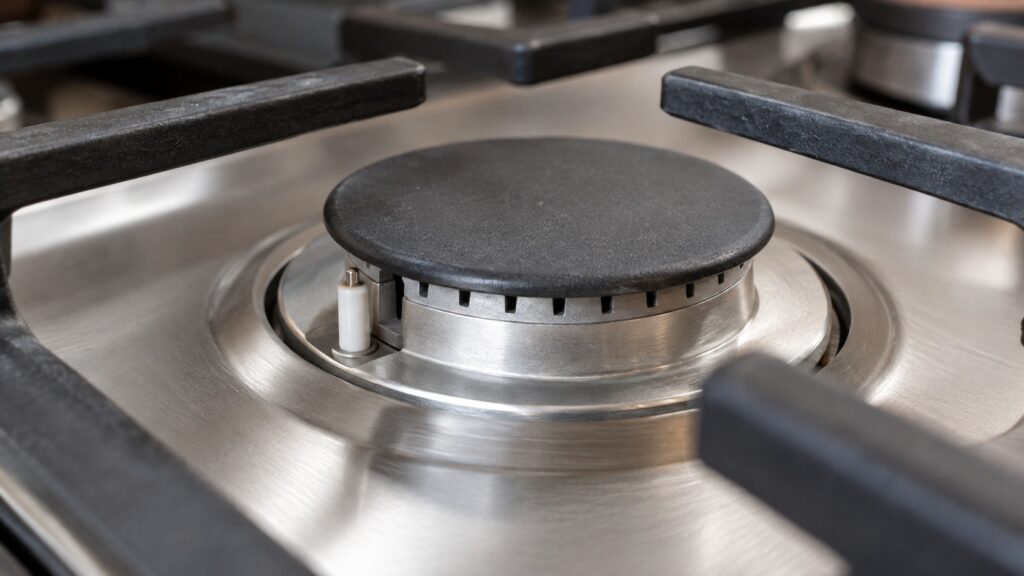
JGC3536GS ignition is a short, three-step sequence. The control opens the gas valve for that burner so gas can flow to the burner head. At the same moment the ignition system sends a high-voltage pulse to the igniter electrode beside that burner, which throws a spark across a small gap. The spark meets the gas and lights it. You hear the clicking while this goes on, and in a few moments the clicking stops because the flame has been proven and the ignition no longer needs to spark.
The word single-point refers to the way the spark is delivered at one point at each burner, instead of through a standing pilot flame that burns all the time. It saves gas, avoids a pilot that can blow out, and makes the cooktop easier to keep clean. The white LED indicator tells you which burner is on, so you can see at a glance that a flame is lit.
What is flame-sensing re-ignition?
A gas flame can blow out: a gust from an open window, a pot of boiling-over liquid, a strong exhaust fan. On a cooktop with no safeguard, gas would keep flowing after a flame went out. Flame-sensing re-ignition gives the burner a way to notice that the flame has disappeared and sparks again to relight it. The result is that a brief draft does not leave gas coming out unlit, and you do not have to turn the knob off and on to restart the burner.
This is a convenience and a safety layer, not a license to ignore a gas smell. If you ever smell gas, turn every knob off, do not use anything that makes a spark, open windows, leave the house and call your gas utility from outside. Do not try to find the leak yourself.
Why does a burner click but not light?
Because the spark is produced and the gas is flowing, but something stops the two meeting properly. These causes account for most cases on a sealed-burner cooktop, and the first three are things an owner can check with the cooktop off and cool:
- Burner cap not seated. After cleaning, a cap that is off-center or tilted blocks the gas ports and the spark. Lift it off and set it back so it sits level and fully engaged.
- Wet cap or head. Water left from cleaning can block the ports. Let everything dry completely, or use a hair dryer on low.
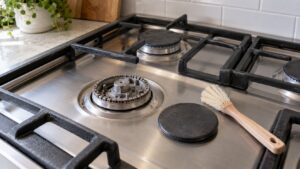
- Clogged ports. Boiled-over food can plug the small slots around the burner head. A soft brush or a straightened paper clip cleans them out gently; do not enlarge them.
- Dirty igniter. Grease or food film on the electrode weakens the spark. Wipe it carefully with a cotton swab dampened with rubbing alcohol when everything is off and cold.
Our guide to cooktop burners that will not ignite walks through the full checklist, and the cooktop maintenance guide shows how to clean without causing the problem.
What should a healthy flame look like?
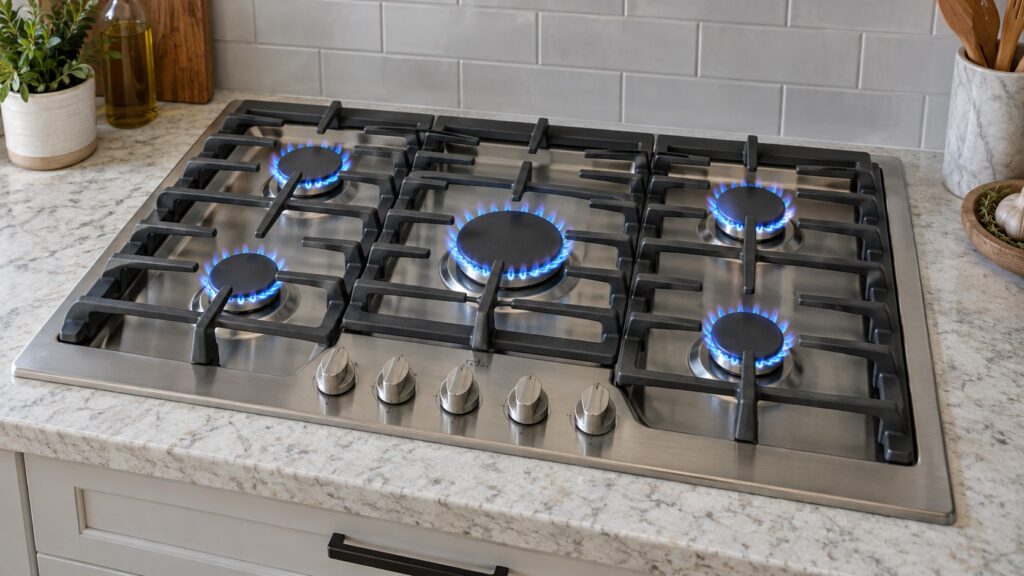
A burner that ignites cleanly should show a steady blue flame that lights all the way round the head within a second or two. A flame that lights in patches, a lazy yellow tip, or a flame that pops and lifts away from the burner points to a partly blocked port, a misaligned cap or an air and gas mixture problem. Yellow flames can also appear if the cooktop was converted to another gas type without the right parts; our LP conversion guide covers the conversion on a Jenn-Air gas range and shows why it should never be improvised. Watch for the LED indicator as well: if it lights but the burner stays dark, shut the knob off at once instead of leaving gas flowing.
How does the dual-stacked PowerBurner fit in?
The 20,000 BTU PowerBurner has two tiers of flame ports, one stacked above the other, so it can deliver heavy heat for searing and boiling and still turn down to a gentle simmer. It uses the same ignition principle as the other four burners, which is why it needs the same care: if the lower or upper ports clog, the flame turns uneven or fails to catch around the ring. For tips on using it, see getting the most from a PowerBurner.
When is it a technician job?
If a clean, dry, correctly seated burner still clicks and does not light, if one burner will not re-light after a flame-out, if the clicking never stops when the burner is already burning, or if you smell gas at any time, the issue is in the ignition parts, the spark module or the gas valve. Those are not owner repairs. Our Jenn-Air cooktop repair technicians can test the igniter, the module and the valve, and the cooktop repair or replace guide helps you weigh a bigger repair. If you are comparing fuel types, cooktop types explains the differences. When you are ready, book a visit with the model number.