This guide covers Maintain Your Jenn-Air Wine Cooler with practical, technician-backed advice.
This guide covers Maintain Your Jenn with practical, technician-backed advice.
This guide covers Jenn-Air Maintain Jenn with practical, technician-backed advice.
A Jenn-Air wine cooler holds a collection at the right temperature only if a handful of maintenance habits are kept up: cleaning the condenser, protecting the dual-zone temperature split, controlling humidity, checking door seals, and minimizing vibration. Wine columns are unforgiving compared to kitchen refrigeration — a few degrees of drift or a leaking seal can affect a bottle’s aging over months, not just spoil food overnight.
Understanding the Maintain Your Jenn-Air Wine Cooler
Below, our specialists break down everything you need to know about the Maintain Your Jenn-Air Wine Cooler.
Understanding the Maintain Your Jenn
Below, our specialists break down everything you need to know about the Maintain Your Jenn.
Understanding the Jenn-Air Maintain Jenn
Below, our specialists break down everything you need to know about the Jenn-Air Maintain Jenn.
Understand Why Dual-Zone Stability Matters
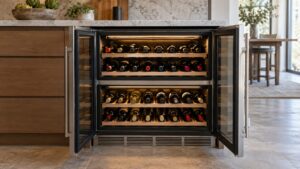
Jenn-Air’s dual-zone wine columns are built to hold separate temperatures for reds and whites at the same time, using independent evaporators or dampers depending on the model. That split only stays accurate if airflow between zones isn’t blocked by overloading shelves or storing bottles against the vents. Check occasionally that both zones are actually holding their set points with a separate thermometer — small persistent gaps between the display and actual temperature are often the earliest sign of a damper or sensor problem.
Clean the Condenser and Ventilation Grille
Like refrigeration columns, wine coolers rely on a condenser and fan to reject heat, usually accessed through a front or bottom grille. Dust buildup here reduces cooling efficiency and can cause a unit to run warmer than its set point, especially in summer. Vacuum the grille every few months, and make sure nothing is stacked against the sides or back of a built-in unit that would block the ventilation path it needs to breathe.
Manage Humidity Without Encouraging Mold
Wine benefits from moderate humidity to keep corks from drying out, but too much moisture inside the cabinet promotes mold on labels and racks. Wipe down interior surfaces periodically and avoid storing damp items inside the unit. If you notice consistent condensation on the glass door or excess moisture on shelves, that often points to a seal that isn’t closing fully rather than a setting that needs adjusting.
Inspect Door Seals and Glass Alignment
The glass door on a wine column is heavier than a standard refrigerator door and can shift slightly on its hinges over years of use, which affects how evenly the gasket seals. Check that the door closes flush on all sides and that the gasket isn’t cracked or compressed unevenly. A door that isn’t sealing correctly forces the compressor to run more often and can cause the temperature swings that damage wine over time.
Minimize Vibration Near the Storage Racks
Excess vibration is one of the more overlooked ways wine quality gets degraded, since it can disturb sediment and accelerate chemical changes in the bottle. Make sure the unit is level, that the racks aren’t loose, and that nothing mechanical is bolted to the same wall or cabinetry causing sympathetic vibration. If the compressor itself has started vibrating more than usual or developed a new rattle, that’s worth having checked before it turns into a bigger repair.
Note the Model’s Bottle Capacity and Shelf Layout
Overloading a wine column beyond its rated bottle capacity restricts the airflow the cooling system depends on to keep both zones even, and it puts extra strain on the compressor over time. If you’ve added racking or reorganized shelves to fit more bottles than the unit was designed for, that’s worth reconsidering before assuming a cooling complaint is a hardware failure — sometimes the fix is simply redistributing bottles rather than calling for service.
Watch the UV Exposure on the Glass Door
Wine columns are usually installed with a UV-filtering glass door for a reason: prolonged light exposure degrades wine chemically over time. If the unit is positioned where direct sunlight hits the door for part of the day, consider whether cabinetry or a window treatment can reduce that exposure, since no amount of internal temperature control offsets the effect of UV light passing through the glass onto the bottles closest to the door.
When to Call for Service
If temperature readings won’t hold steady after cleaning the condenser and checking the seals, or if the compressor is cycling unusually often, the unit likely needs a diagnostic rather than continued adjustment. Our wine cooler repair service handles sealed-system and control issues on Jenn-Air dual-zone columns, and browsing other guides can help you narrow down symptoms before booking. You can schedule an appointment directly, and jennair.com has model-specific capacity and temperature-range details if you want to confirm your unit’s original specifications.
For official product information, visit jennair.com.