TL;DR: A Jenn-Air wine cooler door alarm is the cooler’s way of saying the door has been open, or has not sealed, for too long. The most common causes are bottle necks poking past the shelf edge, a magnetic gasket that did not catch, or a door switch that is stuck. Frost on the back wall is a separate problem that points to the defrost system. Check the door, test the gasket and, if frost keeps returning, defrost manually and watch whether it comes back.
Why does a Jenn-Air wine cooler door alarm keep sounding?
Wine is stored cold, steady and dark, and the cooler tries hard to protect that. When the door stays open longer than it should, the control board raises the OD alert so that the temperature inside does not climb enough to hurt the bottles. On our site OD means the door has been open too long, and it is one of the few codes that clears by itself the moment the cause goes away.
That makes the chime annoying but informative. If it sounds every time you lift out a bottle, the door is probably not closing as fast as you think. If it sounds when nobody has been near the cooler, something is holding the door slightly off its seal, or the switch that senses the door position is stuck in the open state. Our reference page for the OD code has the technical detail.
What should you check first when the alarm will not stop?
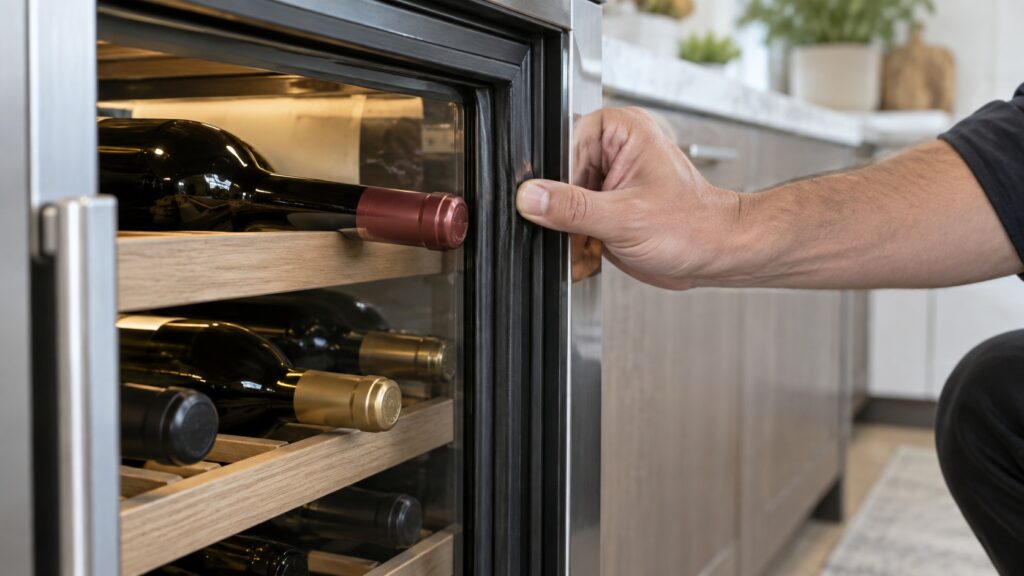
- Press the door closed. Push until the magnetic seal engages with a soft click. The alarm should stop within seconds.
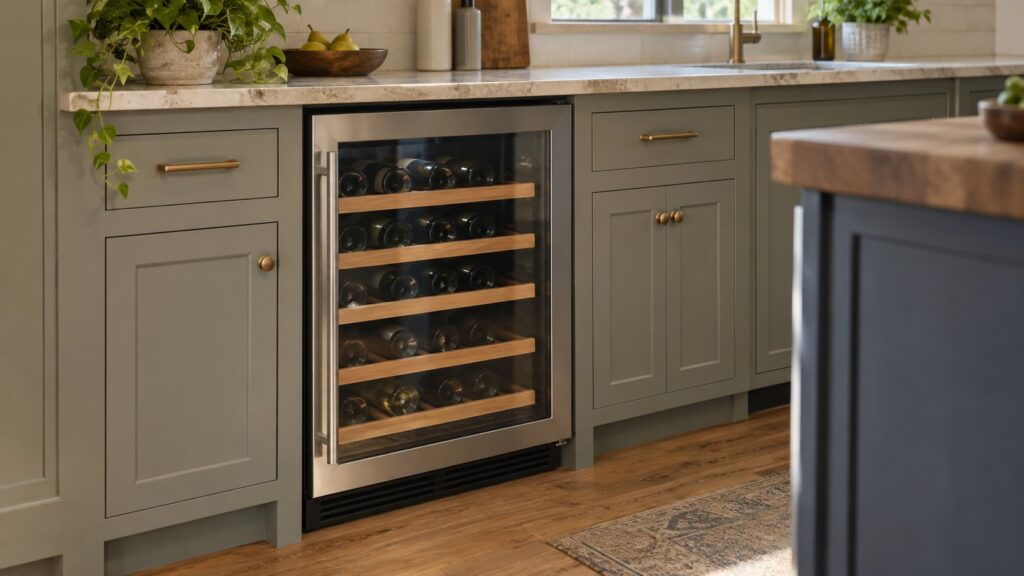
- Look at the bottle necks. A tall bottle on the front of a rack can stick out past the shelf edge and touch the glass, which stops the door from sealing. Reposition it so every bottle sits fully within the shelf.
- Check the gasket. Look for gaps, tears or debris along the frame. Wipe it with a soft damp cloth.
- Do the paper test. Close the door on a strip of paper, or a dollar bill, and pull. If it slips out with no resistance, the seal is weak there.
- Look at the surroundings. A cabinet door, an adjacent drawer or a bin pressed against the front can stop it from closing fully.
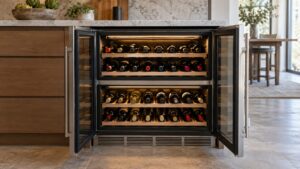
On a glass-door cellar like the JUWFL242HM, the door has some weight, so a slightly out-of-level cooler can let it swing back open a hair. A quick check with a level on the top shelf rules that out.
What does frost on the back wall tell you?
A wine cooler should not build visible frost. A thin film that appears after a hot day or an open door is normal; a thick layer that returns is not. On our site the DF code means the defrost system is malfunctioning: the heater that melts frost from the evaporator coils may have burned out, or the timer or control that starts defrost cycles may have failed. Frost insulates the coil, cooling gets less efficient, and the compressor may cycle more often as it struggles.
Frost can also come from a door that does not seal, because humid room air brings moisture that freezes on the coil. That is why the door checks above come first, even for a frost problem. The reference page for the DF code goes deeper.
How do you run a manual defrost safely?
A manual defrost resets the situation and tells you something at the same time.
- Move the bottles to a cool, dark place, such as a closet, for about 24 hours.
- Unplug the cooler and leave the door open, with towels under the front to catch meltwater.
- After the frost has melted, dry the interior, close the door and plug it back in.
- Over the next few days, look at the back wall. If frost returns quickly, the defrost system is the likely cause and a technician should test it.
If the cooler defrosts and stays frost-free, the cause was a sealing or humidity problem, and your door checks have solved it. Do not chip at ice or use a heat gun or a hair dryer on the coil.
What habits prevent both problems?
- Choose a bottle, then open the door once. Standing with it open while you decide lets warm, humid air in.
- Keep the cooler level, and give it breathing room as the installation sheet requires. Our wine cooler installation and setup guide lists clearances.
- Keep the room below about 85 degrees Fahrenheit; a hot space makes the cooler work harder.
- Wipe the gasket every few weeks as part of how to maintain your wine cooler.
For temperature alarms and sensor codes, read our guide to wine cooler error codes E1 and E2 and temperature alarms, and for the way the two zones are cooled, how the dual-zone cooling works. If the cooler simply does not get cold, see wine cooler not cooling properly. When frost returns after a defrost or the alarm continues with a sealed door, our Jenn-Air wine cooler repair team can test the door switch and defrost heater, and you can book a visit.