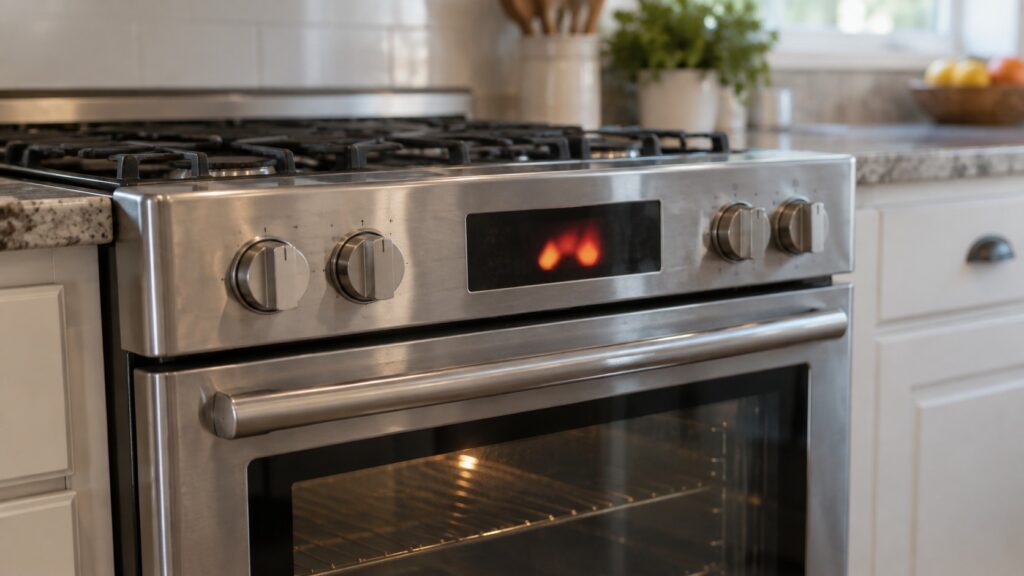
F6-E0 on a Jenn-Air range display is a return-line fault: the control has stopped receiving a signal on the wire it uses to confirm oven temperature readings, and it reports the failure as an open return line. The same four characters show up on a Jenn-Air wall oven, a Jenn-Air cooktop and a Jenn-Air microwave, and on three of those four appliances F6 does not mean the same thing at all. Reading the number without the appliance is a guess.
What does Jenn-Air range error F6-E0 mean?
On a Jenn-Air range, F6-E0 means the oven control board sent a request down the return line of the oven temperature sensor circuit and got nothing back. The board treats a silent line the same way it treats a broken one: it cannot confirm the oven’s actual temperature, so it stops the cook and posts the code rather than let the oven run blind. The fault sits in the wiring path between the control board and the sensor, not necessarily in the sensor itself.
This is a different code family from the door-lock and self-clean faults covered elsewhere on this site. A door-lock fault stops the door from releasing; F6-E0 stops a bake or roast cycle mid-temperature-check, usually with the door still unlocked and the oven light still on.
Why does a Jenn-Air wall oven show the same code with different wording?
A Jenn-Air wall oven displays F6-E0 as “return line not connected” instead of “return line open.” Both descriptions point at the same circuit; the range firmware names the fault by its electrical state, the wall oven firmware names it by the physical condition that usually causes it. Neither wording is more correct — a technician reads them as the identical fault on two different chassis.
Why doesn’t F6 mean the same thing on a cooktop or microwave?
Jenn-Air numbers its fault codes by function group on some appliances and reuses the digit across product lines that were engineered on different control platforms. A range and a wall oven share the oven-sensor wiring architecture closely enough that F6-E0 lines up between them. A cooktop has no oven sensor circuit at all — its F6 flags a surface element that measured hotter than the control expects, a heating fault rather than a wiring fault. A microwave’s F6 is a keypad problem, closer in nature to a stuck-button fault than to anything about temperature.
The lesson for anyone searching a bare code is the same one this site repeats for other Jenn-Air numbers: identify the appliance first, then read that appliance’s own entry, and treat the plain-English phrase next to the number as more reliable than the digits alone.
What should I check before calling for range repair?
A few checks are safe on a range showing F6-E0 and take only a few minutes:
- Cut power for two minutes. Unplug the range or switch its breaker off, wait, then restore power. A momentary connector fault at the back of the oven cavity sometimes clears with a full power cycle and does not return.
- Look for a loose connector behind the range. If the range has been pulled out for cleaning recently, the sensor harness connector at the rear panel is the most common point where a return line gets disturbed.
- Note whether the code returns immediately or only during preheat. A code that reappears the moment power is restored points to a harness or connector fault; one that only appears once the oven starts heating points more toward the sensor itself.
- Write down the exact wording on the display. “Return line open” versus a different F6 phrase changes what a technician checks first.
Stop before removing the rear access panel or disconnecting anything near the oven’s high-voltage terminal block. That work sits close to line voltage and belongs to someone who has already isolated power at the breaker and confirmed it.
Is F6-E0 worth repairing, or is the range near the end of its life?
A return-line fault is almost always a wiring or connector repair rather than a sign the whole range is failing. The oven temperature sensor itself is an inexpensive part, and the harness that carries the return line is accessible without replacing major assemblies. Unless the range already has other unrelated faults stacking up, F6-E0 on its own is not a reason to consider repair or replace — it is a targeted fix.
If burners or the broiler are also acting up alongside the display fault, read range burner or oven not working for the wider troubleshooting picture, since more than one fault at once usually means more than one cause.
How do I stop F6-E0 from coming back?
Once the connector or sensor has been reseated or replaced, routine care around the back of the range keeps the return line from being disturbed again. Avoid sliding the range in and out of its cavity without disconnecting power first, and if the range gets pulled for a deep clean, check that the rear harness routes clear of the cavity wall before pushing the unit back into place. General range maintenance covers the rest of the routine that keeps a Jenn-Air range running between service visits.
When should I schedule a technician for a Jenn-Air range F6-E0 error?
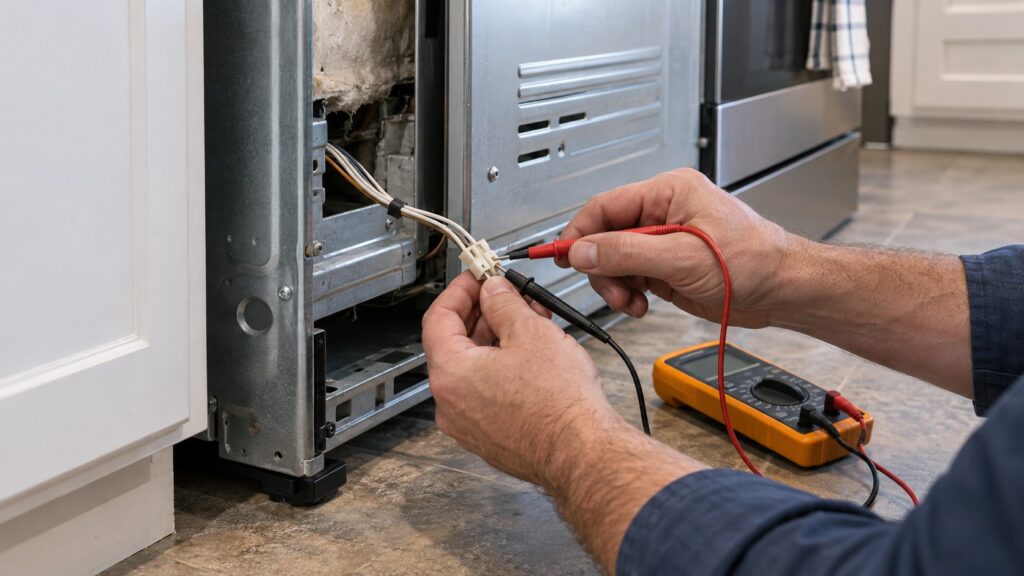
Call for service if the code returns right after a power cycle, if it appears with the oven barely warm, or if the oven now takes noticeably longer to reach temperature than it used to. Those patterns point at the sensor circuit itself rather than a connector that simply needs reseating, and confirming which one it is calls for a multimeter check across the harness.
We are an independent repair company, not a factory service arm, and we will tell you when a repair is not worth doing. Pricing starts from a diagnostic visit and we confirm the estimate before any work begins. Jenn-Air range repair covers F6-E0 and the rest of the oven-sensor fault family, and you can schedule a visit online with the exact code and display wording ready for the technician.