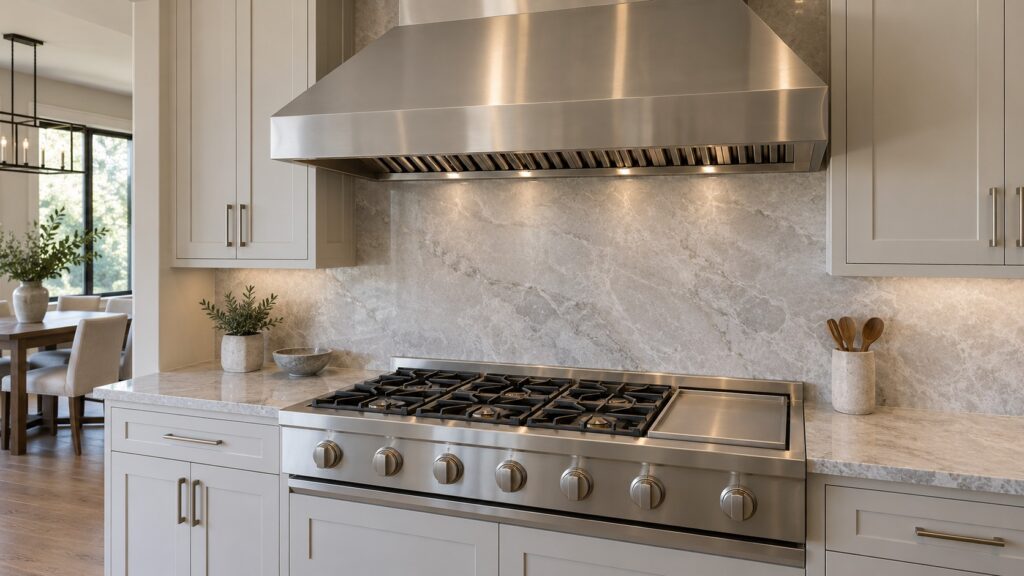
Buying a Jenn-Air 48-inch Pro-Style range comes down to two decisions you can read straight from the model number. First, dual-fuel or all-gas: the dual-fuel models pair gas burners with an electric oven, while the all-gas models use gas for the oven too. Second, grill only or griddle plus grill on the cooktop. The finish, NOIR or RISE, is a separate style choice that does not change how the range cooks. Settle fuel and cooktop layout first, then check your gas line, your 240-volt circuit if you need one, your hood and the path to the kitchen.
How do you read a Jenn-Air 48-inch Pro-Style range model number?
Across the 48-inch models on our site, the letters follow a pattern that makes comparison easy. The pair after the J tells you the fuel: DR for dual-fuel and GR for all-gas. The digits that follow tell you the cooktop layout, where 648 is six burners and a grill and 748 adds a griddle. The last two letters line up with the collection, with HM on the NOIR models and HL on the RISE models in this group. Treat this as a reading guide and not a promise for every model Jenn-Air has ever built, and always confirm with the exact specification sheet before you order.
Note that 36-inch Pro-Style models, such as the dual-fuel JDRP436HM, use the same family of letters, but they are a different size and are not covered here.
Dual-fuel or all-gas: which one should you buy?
The cooktop is the same in both, since both use gas burners. The difference is the oven.
- Dual-fuel uses an electric oven. Electric elements hold a steady temperature with less swing and tend to suit baking, roasting and delicate work. You need both a gas line for the cooktop and a 240-volt circuit for the oven.
- All-gas uses a gas oven. Gas ovens produce more moisture and heat up in a different way, which some cooks prefer for roasting. You need a gas line and an ordinary electrical outlet for the ignition and controls, and no 240-volt circuit.
If you bake often and your kitchen already has 240 volts at the range location, dual-fuel is the usual choice. If the 240-volt run would mean opening walls, or you prefer a gas oven, all-gas saves the electrical work. Our guide to dual-fuel versus gas ranges goes deeper on the cooking differences, and choosing the right range fuel type covers the hookups.
Griddle plus grill, or grill only?
The 748 layout gives you a flat griddle for eggs, pancakes, smash burgers and anything that needs even contact heat, along with the integrated grill. The 648 layout skips the griddle and gives that space back to the grill and burners. A griddle is a pleasure to use and also a surface to clean and season, so think about whether you would actually use it every week.
The integrated grill needs special attention. Indoor grilling produces smoke and grease, which means your ventilation must be strong enough. A griddle produces less smoke but still adds grease to the air. Whichever layout you choose, plan the hood before the range, not after.
What should you prepare before a 48-inch range is delivered?
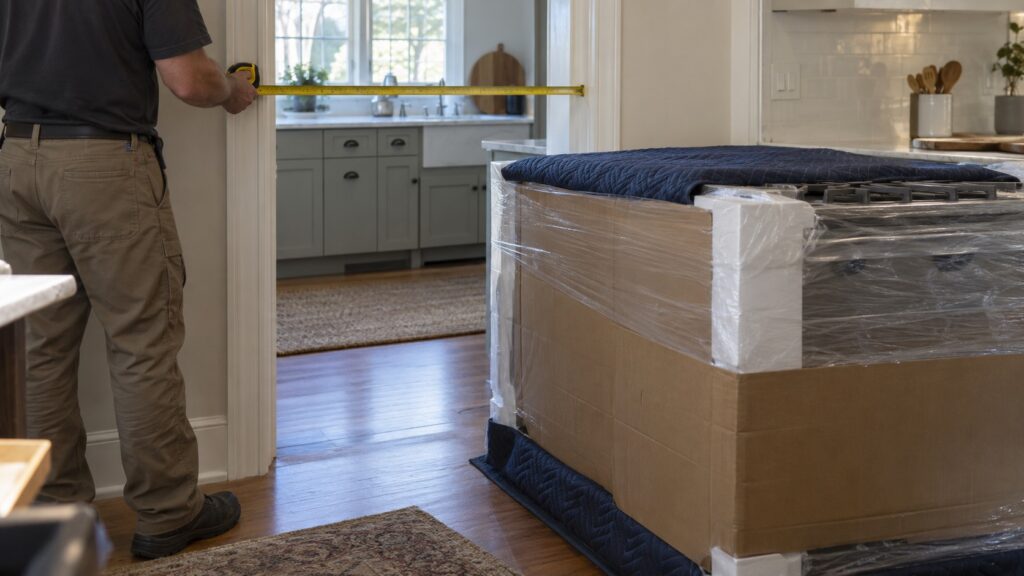
A 48-inch range is heavy and wide, so the delivery and the setup deserve more planning than a 30-inch model. Check these points ahead of time:
- The path. Measure doorways, hallways and turns. A 48-inch range is wider than most standard doors, so confirm that it will reach the kitchen.
- The gas line. The line needs the right size and a shutoff valve within reach. A licensed plumber or gas fitter should do any new gas work.
- The electrical supply. Dual-fuel models need a 240-volt circuit. All-gas models need an outlet for the ignition and controls. Follow the installation sheet for the exact rating.
- The hood. A high-output range needs a hood sized to match its burner power, plus makeup air in a tight home. Our guide to range installation and setup lists the clearances to check.
- The floor and the cabinets. The range must sit level, with the anti-tip hardware fitted and the right distance to the cabinets beside it.
If your home runs on propane, ask about conversion before you order. Our guide to converting a Jenn-Air gas range to propane explains the process.
NOIR or RISE: does the finish matter?
NOIR is the matte black collection, and RISE is the other design collection with its own look. In terms of cooking, the PowerBurner, the oven racks and the Luminary LED halos are shared across the four models above. The one feature difference in this group is that the RISE dual-fuel model lists JennAir Connect Wi-Fi, so if app control matters to you, check the specification sheet of the exact model. Our guide to RISE versus NOIR helps you decide on style.
What should you know about service and care?
A Pro-Style range packs large burners, an electronic oven control and, on dual-fuel models, electric oven elements into one cabinet. Common service calls involve igniters, sensors, door lock parts and control boards, and the same parts families apply across these models. Learn the burner basics first with getting the most from a Jenn-Air PowerBurner. Our Jenn-Air range repair technicians know these models and confirm the model before ordering any part. We are an independent repair company, not a factory service arm, and we will tell you when a repair is not worth doing. You can book a visit before or after your purchase.