Jenn-Air downdraft filter cleaning is a ten-minute job that keeps the vent pulling strongly and prevents a grease fire hazard. Switch the downdraft off, let everything cool, lift out the metal grease filters, soak them in hot soapy water, rinse them and let them dry fully before you put them back. Many are dishwasher safe, but check your use and care guide first. If your system recirculates air through a charcoal filter, that one is replaced and never washed.
What does the downdraft filter do on a Jenn-Air cooktop or range?
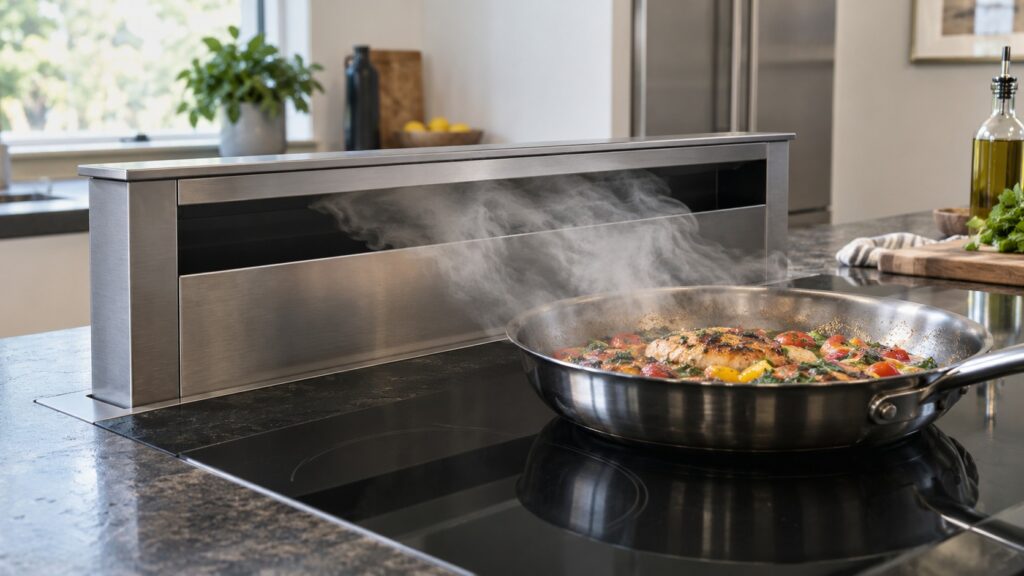
A downdraft system pulls cooking fumes down and away from the pan instead of up into a hood. As the air is drawn through the vent, a metal mesh filter catches grease droplets so they do not coat the blower and the duct. Models such as the JES1750ML, an electric slide-in range with integrated downdraft, depend on that filter in the same way as a downdraft cooktop does.
A clean filter lets air through freely. A clogged one restricts the airflow, so smoke lingers over the pan, the blower works harder and the vent gets noisy. It is also a fire risk, since built-up grease burns. If you want to understand why this style of ventilation needs more care than a hood, read our guide on how downdraft ventilation works.
How often should you clean the filter?
A monthly wash suits most households. Cook with a lot of oil, sear steaks, use the grill or fry regularly and you should clean it every couple of weeks. If you mostly boil and simmer, every second month may be enough. A practical test is to look at the mesh: if you see a dull film or visible drips of grease, it is overdue. If the mesh is still bright with no coating, you can wait.
Put a reminder on the same day as other kitchen chores. Filters that go a year without cleaning get a hard, sticky layer that takes far longer to soak off.
How do you remove and clean a metal grease filter?
- Turn the downdraft off and let the cooktop cool. The vent area is near the burners and the surface can stay hot long after cooking.
- Raise the vent if your model requires it. On some models the filter is reached through the vent opening or after lifting a grille. Your use and care guide shows the release.
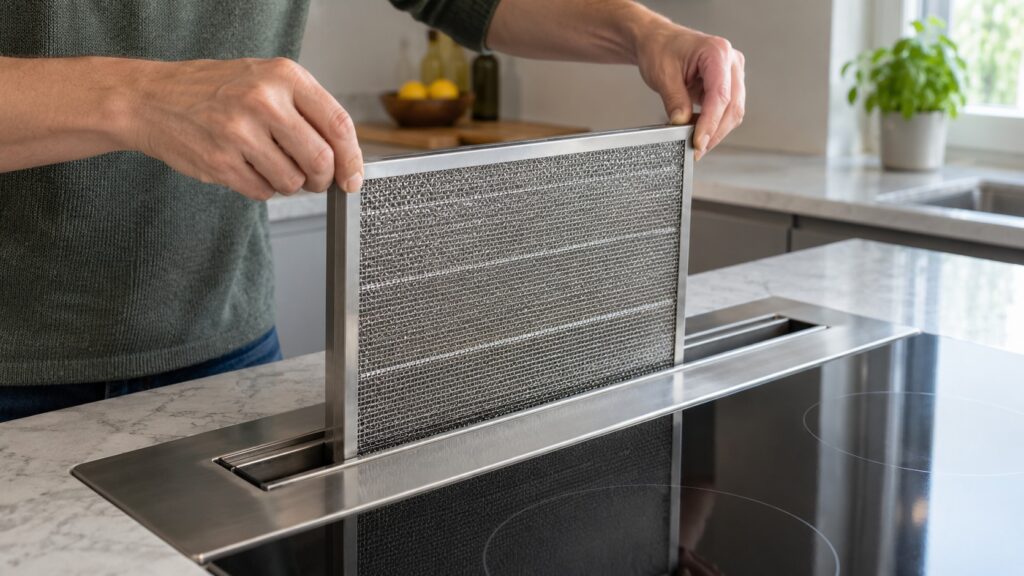
- Lift the filter out with both hands, keeping it level so that trapped grease does not drip down into the vent.
- Soak it. Use a sink or tub of very hot water with a squirt of dish soap or degreaser, and leave it for fifteen minutes.
- Scrub gently. Use a soft brush to clear the mesh and rinse with hot water until it runs clear. If the manual allows the dishwasher, run it on a normal cycle instead.
- Let it dry completely. A damp filter fitted back into a warm vent breeds odors.
- Refit it the same way it came out, and make sure it sits flat and the latch or tab is secure.
Avoid abrasive pads and harsh oven cleaner on the mesh, since they can damage the finish and the frame.
What about the charcoal filter on a recirculating system?
If your downdraft does not vent outdoors, the air passes through a charcoal filter before it returns to the room. The charcoal absorbs odors, and once it has absorbed all it can, it stops working. It cannot be washed or reused. Replace it on the schedule in your manual, which is typically every several months depending on how much you cook. If cooking smells linger after you have cleaned the grease filter, a spent charcoal filter is the usual cause. Ducted systems do not have one.
What else should you check while the filter is out?
With the filter out, the vent opening is easy to inspect. Use a flashlight and look for a few things:
- Grease on the vent walls. Wipe what you can reach with a degreasing cloth.
- Debris near the blower. Remove anything loose, such as a bit of foil or food, with your hand or a plastic tool and never a metal one.
- The vent mechanism. If the vent is slow to rise or does not rise, our guide to the Jenn-Air downdraft vent that will not raise covers what to check.
- Seals and gaskets. Look for cracked or flattened strips that let air leak instead of pulling it through the filter.
Do not reach into the blower housing or touch any wiring. The blower and its wiring sit close to mains power, and they are a technician’s job.
When does it need more than cleaning?
A clean downdraft that still pulls weakly, rattles, smells burnt or does not move at all has a problem beyond the filter. Common reasons include a failing blower motor, a blocked or crushed duct, a failed vent motor or a worn sensor. A cooktop on a duct that runs a long way, or a duct with several turns, will always pull less than a short straight run, so compare the performance to when it was new. If you are weighing a repair against something new, our guides to downdraft ventilation repair or replace and downdraft versus overhead ventilation help you decide, and how to maintain your cooktop covers the rest of the routine.
Our Jenn-Air cooktop repair technicians test the blower, the vent motor and the duct on site. We are an independent repair company, not a factory service arm, and we will tell you when a repair is not worth doing. You can book a visit with your model number.